“I have often expressed my sentiments, that every man, conducting himself as a good citizen, and being accountable to God alone for his religious opinions, ought to be protected in worshipping the Deity according to the dictates of his own conscience.”
Quote by George Washington
Work
The Writings of George Washington: Being His Correspondence, Addresses, Messages, and Other Papers, Official and Private
The Writings of George Washington is a comprehensive collection of documents written by the first President of the United States. It includes his correspondence with various individuals, public addresses, official messages, and personal papers, offering insight into Washington's thoughts, actions, and leadership during his lifetime. more
Author
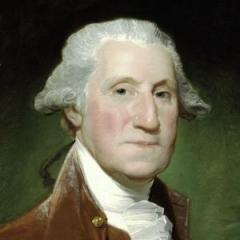
George Washington
George Washington was the first President of the United States and a key figure in the American Revolutionary War. Born on February 22, 1732, and died on December 14, 1799, Washington is known for his strong leadership and belief in democracy, playing a crucial role in American history. more
You May Also Like
Source: The Writings of George Washington: Being His Correspondence, Addresses, Messages, and Other Papers, Official and Private
Source: Selected Writings of James Madison
Source: Jefferson on Freedom: Wisdom, Advice, and Hints on Freedom, Democracy, and the American Way
Source: Common Sense: and The American Crisis I
Source: Selected Writings of James Madison
Source: The forging of American federalism: selected writings of James Madison
Source: Maxims of Washington: Political, Social, Moral, and Religious
Source: 1769-1793. v.2. 1794-1815. v.3. 1816-1828. v.4. 1829-1836
Source: Selected Writings of James Madison