“The world is nothing but 'world-as-meaning.”
Quote by Maurice Merleau-Ponty
Work
Phenomenology of Perception
This book delves into the philosophical underpinnings of how humans perceive the world around them, examining the relationship between consciousness and sensory experience. more
Author
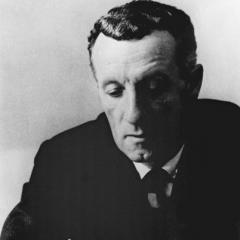
Maurice Merleau-Ponty
Maurice Merleau-Ponty was a French philosopher renowned for his contributions to phenomenology. His seminal work, 'Phenomenology of Perception', delves into the nature of perception and the significance of the body in interpreting the world. Merleau-Ponty's philosophy underscores the centrality of experience and the importance of the lived body. more
You May Also Like
Source: Signs
“It is a great good fortune, as Stendhal said, for one "to have his passion as a profession.”
Source: In Praise of Philosophy and Other Essays
Source: In Praise of Philosophy and Other Essays
Source: In Praise of Philosophy
Source: In Praise of Philosophy and Other Essays
Source: In Praise of Philosophy and Other Essays
Source: In Praise of Philosophy and Other Essays
Source: In Praise of Philosophy and Other Essays