Quotessence
Home / Quotes / Quote by Marcia Angell

Quote by Marcia Angell

Author

Marcia Angell
Marcia Angell

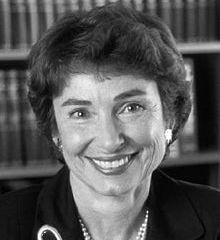
Marcia Angell is an American physician and medical writer. Born on April 20, 1939, she graduated from Harvard Medical School and completed her residency at Massachusetts General Hospital in Boston. Angell served as the editor-in-chief of The New England Journal of Medicine, becoming the first woman to hold the position in the journal's history. Throughout her career, she has been committed to improving the quality and transparency of medical research and advocating for medical ethics, particularly in the areas of clinical trials and drug approval. more

You May Also Like

“Twenty-eight to 31 is the tough period. You have to be really careful because it's so cataclysmic, so life-altering. People do really dramatic things like get married, or they'll get divorced. Your chances of committing suicide go way up. It's basically psychic death. You see the signs of it around 27, and you're still on the out-end of it around 31. Everyone I've talked to who's gone through that and come out the other side walks out of it like, "MY LIFE IS GREAT".”

“I created a paradigm by which I could succeed, and up until recently it was the only way I could do it. I could not take the brunt of standing in the light of my own work. There was a Faustian bargain I could not make. I could have you mock me for wearing funny clothes that I could deal with. But I couldn't deal with actually standing in the light of my own musical power. That's the difference now. It's like, okay, no more of that, you're done.”

“I have never seen myself as an alarmist but rather as a scientist with a critical viewpoint, and in that sense I have always been a skeptic. I have devoted most of my career to developing models for predicting the weather, and in doing so I have learned the importance of validating forecasts against observed weather. As a result, that's an approach I strongly favor for "climate predictions." It's essential to validate model results, especially when dealing with complex systems such as the climate. It's essential do so properly if such predictions are to be considered credible.”

“Throughout my life, I have been fascinated by predictability and frustrated by our inability to predict. I don't believe it makes sense for our generation to believe or pretend that we can solve the problems of the future because do not understand what these problems will be. Just do this thought experiment: Imagine you're in month of May 1914, and try to work out a plan of action for the next 100 years! Hardly anything will make sense.”

“I think the best and perhaps only sensible policy for the future is to prepare society for change and be prepared to adjust. In 25 years, we'll have a world with some 9 to 10 billion people that will require twice as much primary energy as today. We must embrace new science and technology in a more positive way than we presently do in Europe. This includes, for example, nuclear energy and genetic food production to provide the world what it urgently needs.”