Quotessence
Home / Quotes / Quote by Cassius Jackson Keyser

Quote by Cassius Jackson Keyser

“It happens, therefore, that readers of the book, or of any other book built about a central concept, fall into three mutually exclusive classes: (I) The class of those who miss the central concept-(I have known a learned historian to miss it) -not through any fault of their own,-they are often indeed well meaning and amiable people,-but simply because they are not qualified for conceptual thinking save that of the commonest type. (II) The class of those who seem to grasp the central concept and then straightway show by their manner of talk that they have not really grasped it but have at most got hold of some of its words. Intellectually such readers are like the familiar type of undergraduate who "flunks" his mathematical examinations but may possibly "pull through" in a second attempt and so is permitted, after further study, to try again. (III) The class of those who firmly seize the central concept and who by meditating upon it see more and more clearly the tremendous reach of its implications. If it were not for this class, there would be no science in the world nor genuine philosophy. But the other two classes are not aware of the fact for they are merely "verbalists" In respect of such folk, the "Behaviorist" school of psychology is right for in the psychology of classes (I) and (II) there is no need for a chapter on "Thought Processes"- it is sufficient to have one on "The Language Habit.”

Quote by Cassius Jackson Keyser

Author
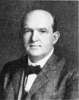
Cassius Jackson Keyser

Cassius Jackson Keyser was an American mathematician known for his contributions to the field of mathematics, particularly in the areas of number theory and algebra. He was born on May 15, 1862, and passed away on May 8, 1947. more

You May Also Like

“Puisque la maîtresse me "reprenait", plus tard j'ai voulu reprendre mon père, lui annoncer que "se parterrer" ou "quart moins d'onze heures" n'existaient pas. Il est entré dans une violente colère. Une autre fois : "Comment voulez-vous que je ne me fasse pas reprendre, si vous parlez mal tout le temps!" Je pleurais. Il était malheureux. Tout ce qui touche au langage est dans mon souvenir motif de rancœur et de chicanes douloureuses, bien plus que l'argent.”

“All conservative ideologies justify existing inequities as the natural order of things, inevitable outcomes of human nature. If the very rich are naturally so much more capable than the rest of us, why must they be provided with so many artificial privileges under the law, so many bailouts, subsidies and other special considerations - at our expense? Their "naturally superior talents" include unprincipled and illegal subterfuge such as price-fixing, stock manipulation, insider training, fraud, tax evasion, the legal enforcement of unfair competition, ecological spoliation, harmful products and unsafe work conditions. One might expect naturally superior people not to act in such rapacious and venal ways. Differences in talent and capacity as might exist between individuals do not excuse the crimes and injustices that are endemic to the corporate business system.”

“It was characteristic of the rise of the Nazi movement in Germany and of the Communist movements in Europe after 1930 that they recruited their members from this mass of apparently indifferent people whom all other parties had given up as too apathetic or too stupid for their attention. The result was that the majority of their membership consisted of people who never before had appeared on the political scene. This permitted the introduction of entirely new methods into political propaganda, and indifference to the arguments of political opponents; these movements not only placed themselves outside and against the party system as a whole, they found a membership that had never been reached, never been "spoiled" by the party system. Therefore they did not need to refute opposing arguments and consistently preferred methods which ended in death rather than persuasion, which spelled terror rather than conviction. They presented disagreements as invariably originating in deep natural, social, or psychological sources beyond the control of the individual and therefore beyond the power of reason. This would have been a shortcoming only if they had sincerely entered into competition with other parties; it was not if they were sure of dealing with people who had reason to be equally hostile to all parties.”