Quotessence
Home / Quotes / Quote by Tamora Pierce

Quote by Tamora Pierce

“Corus lay on the southern bank of the Oloron River, towers glinting in the sun. The homes of wealthy men lined the river to the north; tanners, smiths, wainwrights, carpenters, and the poor clustered on the bank to the south. The city was a richly colored tapestry: the Great Gate on Kings-bridge, the maze of the Lower City, the marketplace, the tall houses in the Merchants' and the Gentry's quarters, the gardens of the Temple district, the palace. This last was the city's crown and southern border. Beyond it, the royal forest stretched for leagues. It was not as lovely as Berat nor as colorful as Udayapur, but it was Alanna's place.”

Quote by Tamora Pierce

Author
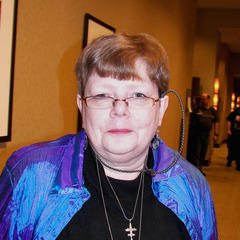
Tamora Pierce
Tamora Pierce

Tamora Pierce is an American writer known for her young adult literature. Her works often explore themes of gender, power, and growth, and are highly appreciated by young readers. more

You May Also Like

“Did you see Grace is back with us?" Megan did see me. She saw me jump off a cliff and crawl under an Iranian fence. Megan has seen plenty. And I can't help but hold my breath, waiting on her answer. "Hi," Megan says, turning to me. "Welcome home." Home. The word hits me. I've spent all my life thinking that I didn't have one, but now that I'm back I can't deny that I've spent more my life on Embassy Row than in any other place-that maybe it just wasn't my mother's childhood home. In a way, it's mine, too.”

“A man goes away from his home and it is in him to do it. He lies in strange beds in the dark, and the wind is different in the trees. He walks in the street and there are the faces in front of his eyes, but there are no names for the faces. the voices he hears are not the voices he carried away in his ears a long time back when he went away. The voices he hears are loud. they are so loud he does not hear for a long time at a stretch those voices he carried away in his ears. but there comes a minute when it is quiet and he can hear those voices he carried away in his ears a long time back. He can make out what they say, and they say: Come back. They say: Come back, boy. So he comes back.”

“Home is a damaged word, bruisable as fruit, in the cruel glossaries of the language I choose to describe the long, fearful march of my childhood. Home was a word that caught in my throat, stung like a paper cut, drew blood in its passover of my life, and hurt me in all the soft places. My longing for home was as powerful as fire in my bloodstream.”