“In our small chess community in Marylebone it would be mock modesty on my part to deny that I have built up for myself a considerable name without ever actually having won a single game. Even the best players are sometimes beaten, and that is precisely what happens to me.”
Quote by Stephen Potter
Work
Three-upmanship: The theory & practice of gamesmanship: Some notes on lifemanship [and] One-upmanship
This book delves into the concepts of gamesmanship, examining how individuals can excel in competitive situations both in games and in everyday life. It provides a comprehensive look at the theory and practice of outwitting opponents while maintaining a high level of sportsmanship and elegance. more
Author
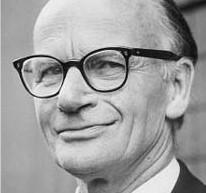
Stephen Potter
Stephen Potter (February 1, 1900 – December 2, 1969) was a British author, playwright, and humorist, best known for his 'Gamesmanship' series. He studied English at University College London and later worked as a literary editor and BBC scriptwriter. Potter's most famous work, 'The Theory and Practice of Gamesmanship' (1947), humorously explores psychological tactics in social and competitive situations. His writings influenced later humorists and popular culture, earning him a reputation as a master of British wit. Potter's legacy endures through his unique blend of satire and social observation. more
You May Also Like
Source: Realizing Freedom: Libertarian Theory, History, and Practice
Source: Three plays