Quotessence
Home / Quotes / Quote by Fyodor Dostoevsky

Quote by Fyodor Dostoevsky

Work

The Brothers Karamazov

Fyodor Dostoevsky's classic work delves into the complex relationships and internal conflicts of the Karamazov siblings, examining themes of faith, doubt, and redemption. more

Author
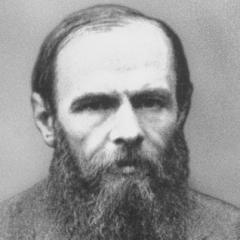
Fyodor Dostoevsky
Fyodor Dostoevsky

A renowned Russian novelist and a pioneer of psychological novels. His works deeply reveal the complexity of human nature and the injustice of society, having a profound impact on literature worldwide. more

You May Also Like

“A supposedly daring insight came up, disguised as a question: Dr. Cole, aren't humans the most invasive species of all? She'd fielded that one many times before, during public lectures and even in her days as a teaching assistant [...] 'I'm not unsympathetic to that line of thinking,' she answered, 'but even if it's true, we're also the only species in any position to do anything about it.”

“Most big freshwater fish, in most parts of the world, have all but disappeared from most places where they used to live. As with arapaima, the main reason is over-harvesting, but there are other factors too. Dams block the migration routes of many fish, so they disappear from the water above the dam — or even altogether, if breeding grounds are cut off. Draining of floodplains, cutting off backwaters, competition from invasive species and pollution also play a part. And sometimes it's just willful slaughter, as was the case with the North American alligator gar in the early 1900s, thanks to the incorrect assumption that killing these predators would boost populations of ‘game’ fish.”

“To make good environmental decision, we must stop focusing on trying to remove or undo human influence, on turning back time or freezing the non-human world in amber. We must instead acknowledge the extent to which we have influenced our current world and take some responsibility for its future trajectory…We should not seek to carefully control every plant and animal on the planet. We couldn’t even if we wanted to.”

“When non-human animals are killed simply because they 'don't belong' and not because they are clearly causing some measurable harm, we have decided that erasing the taint of th ehuman is more important than the lives of animals (who, lest we forget, have no conception that they are in the 'wrong' place). This does not feel like humility in action. It is often the case that we hurt and kill animals because they are having effects we don't like, perhaps by predating on rare animals or eating rare plants. That's a trickier question--one we will tackle in due course.”

“To me, this suggests that our thinking around 'invasive species' needs to be fine-tuned. Instead of a paradigm where we see all 'foreign' species as malevolent invaders that should be considered threats to ecological integrity unless proven otherwise, maybe we should instead see islands species as particularly vulnerable to newly arriving species. Indeed, the over concept of the 'native' has some fundamental problems. It derives from precisely that frozen-in-time idea of 'ecosystem integrity' that, as we've seen, is riddled with conceptual shortcomings. Ecologists have spent decades assigning 'native ranges' to species, usually based on where they were when the first white scientist showed up to take notes. These ranges are pegged to an arbitrary point in time, a moment in the long evolutionary and geographical journey of a particular lineage.”

“In addition, they say, not everyone in New Zealand is okay with strewing poison all over the land, or even support of the goals of the [invasive-species removal] project. 'The eradication of some introduced species is also contentious because some Maori regard them as culturally important,' they write. "the Pacific rat, for example, while targeted by Predator Free 2050, is protected on some Maori lands.”