Quotessence
Home / Quotes / Quote by Walter Lippmann

Quote by Walter Lippmann

“For the most part we do not first see, and then define, we define first and then see. In the great blooming, buzzing confusion of the outer world we pick out what our culture has already defined for us, and we tend to perceive that which we have picked out in the form stereotyped for us by our culture.”

Quote by Walter Lippmann

Work

Public Opinion

This book delves into the formation, influence, and consequences of public opinion, exploring its role in shaping societal norms and political landscapes. more

Author

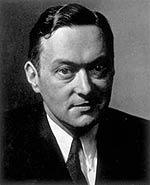
Walter Lippmann
Walter Lippmann

Walter Lippmann was a prominent American writer and political commentator, born on September 23, 1889, and died on December 14, 1974. He was known for his profound insights into political and social issues and was one of the most influential political analysts in the United States during the 20th century. more

You May Also Like

“If somebody can create an absolute system of beliefs and rules of conduct that will guide a business man at eleven o'clock in the morning, a boy trying to select a career, a woman in an unhappy love affair--well then, surely no pragmatist will object. He insists only that philosophy shall come down to earth and be tried out there.”

“The education we all receive from the State, at school and after, has so warped our minds that the very notion of freedom ends up by being lost, and disguised in servitude. It is a sad sight to see those who believe themselves to be revolutionaries unleashing their hatred on the anarchist just because his views on freedom go beyond their petty and narrow concepts of freedom learned in the State school.”

“A different conception of society, very different from that which now prevails, is in process of formation. Under the name of Anarchy, a new interpretation of the past and present life of society arises, giving at the same time a forecast as regards its future, both conceived in the same spirit as the above-mentioned interpretation in natural sciences. Anarchy, therefore, appears as a constituent part of the new philosophy, and that is why Anarchists come in contact, on so many points, with the greatest thinkers and poets of the present day.”