Quotessence
Home / Quotes / Quote by Sun Tzu

Quote by Sun Tzu

“故曰:知彼知己,百戰不殆;不知彼而知己,一勝一負;不知彼,不知己,每戰必敗。”

Quote by Sun Tzu

Author
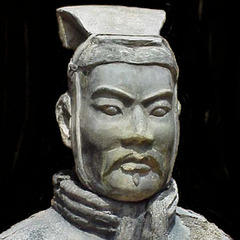
Sun Tzu
Sun Tzu

Sun Tzu, born around 544 BC and died around 496 BC, was a renowned Chinese military strategist. His military thoughts are mainly reflected in his book 'The Art of War', which is considered the classic of military strategy and has had a profound impact on various fields such as military, politics, and economics in later generations. more

You May Also Like

“What was really needed was a fundamental change in our attitude toward life. We had to learn ourselves and, furthermore, we had to teach the despairing men, that it did not really matter what we expected from life, but rather what life expected from us. We needed to stop asking about the meaning of life, and instead to think of ourselves as those who were being questioned by life--daily and hourly. Our answer must consist, not in talk and meditation, but in right action and in right conduct. Life ultimately means taking the responsibility to find the right answer to its problems and to fulfill the tasks which it constantly sets for each individual. These tasks, and therefore the meaning of life, differ from man to man, and from moment to moment. Thus it is impossible to define the meaning of life in a general way. Questions about the meaning of life can never be answered by sweeping statements. “Life” does not mean something vague, but something very real and concrete, just as life’s tasks are also very real and concrete. They form man’s destiny, which is different and unique for each individual. No man and no destiny can be compared with any other man or any other destiny. No situation repeats itself, and each situation calls for a different response. Sometimes the situation in which a man finds himself may require him to shape his own fate by action. At other times it is more advantageous for him to make use of an opportunity for contemplation and to realize assets in this way. Sometimes man may be required simple to accept fate, to bear his cross. Every situation is distinguished by its uniqueness, and there is always only one right answer to the problem posed by the situation at hand. When a man finds that it is his destiny to suffer, he will have to accept his suffering as his task; his single and unique task. He will have to acknowledge the fact that even in suffering he is unique and alone in the universe. No one can relieve him of his suffering or suffer in his place. His unique opportunity lies in the way in which he bears his burden.”

“We had to learn ourselves and, furthermore, we had to teach the despairing men, that it did not really matter what we expected from life, but rather what life expected from us. We need to stop asking about the meaning of life, and instead to think of ourselves as those who were being questioned by life—hourly and daily. Our answer must consist not in talk and meditation, but in right action and in right conduct. Life ultimately means taking the responsibility to find the right answers to its problems and to fulfill the task which it constantly sets for each individual.”