“Whether moral and social phenomena are really exceptions to the general certainty and uniformity of the course of nature; and how far the methods, by which so many of the laws of the physical world have been numbered among truths irrevocably acquired and universally assented to, can be made instrumental to the gradual formation of a similar body of received doctrine in moral and political science.”
Quote by John Stuart Mill
Work
The Collected Works of John Stuart Mill: Utilitarianism, The Subjection of Women, On Liberty, Principles of Political Economy, A System of Logic, Ratiocinative and Inductive, Memoirs…
This compilation encompasses John Stuart Mill's major philosophical essays and treatises, offering insights into his contributions to moral philosophy, political theory, and economics. It includes his influential essays on utilitarianism, the subjection of women, and the nature of liberty, as well as his economic theories and logical methods. more
Author
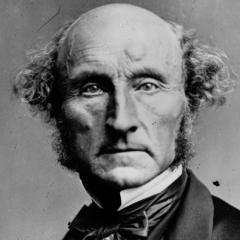
John Stuart Mill
John Stuart Mill was an influential British philosopher, economist, and logician. He is one of the most important figures in 19th-century philosophy and his ideas had a profound impact on political, social, and philosophical thought of the time. more
You May Also Like
“The game has basically not changed since I ended my career.”
Source: The Commonwealth, and the reigns of Charles II. and James II
Source: The Water-babies: A Fairy Tale for a Land-baby
Source: Lacon: Or Many Things in Few Words, Addressed to Those who Think
“Empty pockets make empty heads.”
Source: The Collected Poems of William Carlos Williams: 1939-1962
“The inevitable consequence of poverty is dependence.”
Source: Samuel Johnson's Lives of the Poets