“Good and evil are essential differences of the act of the will. For good and evil pertain essentially to the will; just as truth and falsehood pertain to the reason, the act of which is distinguished essentially by the difference of truth and falsehood (according as we say that an opinion is true or false.) Consequently, good and evil volition are acts differing in species.”
Quote by Thomas Aquinas
Work
Basic Writings of St. Thomas Aquinas, Volume 2
The second volume of Basic Writings of St. Thomas Aquinas presents a curated selection of the philosopher's works, providing insight into his intellectual contributions to philosophy, theology, and natural law. It includes texts that delve into metaphysics, ethics, and the nature of God, showcasing Aquinas' scholastic approach and his influence on Western thought. more
Author
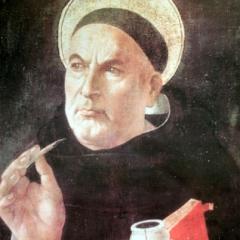
Thomas Aquinas
Thomas Aquinas, born on January 28, 1225 and died on March 7, 1274, was a renowned theologian, philosopher, and priest. He is considered one of the greatest theologians of the Middle Ages and his works have had a profound impact on philosophy and theology. more
You May Also Like
Source: Philosophical Texts
“Mistakes are made on two counts: an argument is either based on error or incorrectly developed.”
Source: St. Thomas Aquinas: Philosophical Texts
Source: Summa Theologica, (Complete)
Source: Collected Poems 1943-2004