“It is not contrary to reason to prefer the destruction of the whole world to the scratching of my finger. It is not contrary to reason for me to choose my total ruin, to prevent the least uneasiness of an Indian, or person wholly unknown to me. It is as little contrary to reason to prefer even my own acknowledged lesser good to my greater, and have a more ardent affection for the former than the latter.”
Quote by David Hume
Author
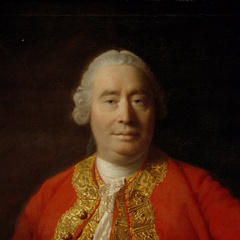
David Hume
David Hume, born on May 7, 1711, in Edinburgh, Scotland, and died on August 25, 1776, was an outstanding philosopher, historian, and economist. Known for his contributions to empiricism and skepticism, his works have had a profound impact on subsequent philosophy, economics, and psychology. more
You May Also Like
Source: Delphi Complete Works of David Hume (Illustrated)
Source: The Natural History of Religion
Source: An Enquiry Concerning the Principles of Morals
Source: Delphi Complete Works of David Hume (Illustrated)
Source: Delphi Complete Works of David Hume (Illustrated)
Source: Essays, moral, political, and literary.- v. 2. An inquiry concerning human understanding. A dissertation on the passions. An inquiry concerning the principles of morals. The natural history of religion
Source: Delphi Complete Works of David Hume (Illustrated)
Source: An Enquiry Concerning Human Understanding; [with] A Letter from a Gentleman to His Friend in Edinburgh; [and] An Abstract of a Treatise of Human Nature
Source: A Treatise of Human Nature
Source: The Philosophical Works of David Hume ... Containing Dialogues Concerning Natural Religion, Essays on the Immortality of the Soul, Suicide ... &c. A New Edition