“When we reflect on our past sentiments and affections, our thought is a faithful mirror, and copies its objects truly; but the colours which it employs are faint and dull, in comparison of those in which our original perceptions were clothed.”
Quote by David Hume
Work
An Enquiry Concerning Human Understanding; [with] A Letter from a Gentleman to His Friend in Edinburgh; [and] An Abstract of a Treatise of Human Nature
This book is a comprehensive examination of the fundamental principles of human knowledge, perception, and reason. It includes a letter discussing philosophical ideas and an abstract summarizing a broader treatise on human nature. more
Author
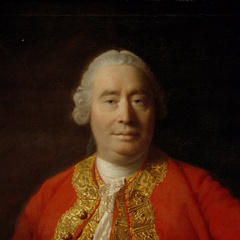
David Hume
David Hume, born on May 7, 1711, in Edinburgh, Scotland, and died on August 25, 1776, was an outstanding philosopher, historian, and economist. Known for his contributions to empiricism and skepticism, his works have had a profound impact on subsequent philosophy, economics, and psychology. more
You May Also Like
Source: A Treatise of Human Nature
Source: The Philosophical Works of David Hume ... Containing Dialogues Concerning Natural Religion, Essays on the Immortality of the Soul, Suicide ... &c. A New Edition
“Some men live with an invisible limp, stagger, or drag a leg. Their sons are often angry.”
Source: The man in the black coat turns: poems
Source: The man in the black coat turns: poems
Source: Iron John: A Book about Men
Source: Conversations on the Dark Secrets of Physics