Quotessence
Home / Quotes / Quote by Aberjhani

Quote by Aberjhani

Work

Author

Aberjhani
Aberjhani

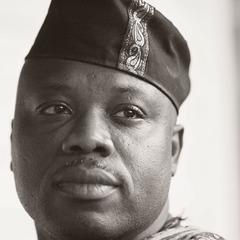
Aberjhani, born on July 8, 1957, is an accomplished columnist whose work spans a wide range of topics including culture, history, and literature. Renowned for his profound insights and unique writing style, Aberjhani's articles often provoke deep thought among readers. more

You May Also Like

“We celebrate the differences among us, even that which we cannot reconcile, not in denial of the absolute, but in the gift of humility that those differences require of us. Without denying our differences, we no longer allow them to categorize or divide us. It is in the diversity that the image of God is most fully reflected in and through us.”

“Jonathan Sacks; “One way is just to think, for instance, of biodiversity. The extraordinary thing we now know, thanks to Crick and Watson’s discovery of DNA and the decoding of the human and other genomes, is that all life, everything, all the three million species of life and plant life—all have the same source. We all come from a single source. Everything that lives has its genetic code written in the same alphabet. Unity creates diversity. So don’t think of one God, one truth, one way. Think of one God creating this extraordinary number of ways, the 6,800 languages that are actually spoken. Don’t think there’s only one language within which we can speak to God. The Bible is saying to us the whole time: Don’t think that God is as simple as you are. He’s in places you would never expect him to be. And you know, we lose a bit of that in English translation. When Moses at the burning bush says to God, “Who are you?” God says to him three words: “Hayah asher hayah.”Those words are mistranslated in English as “I am that which I am.” But in Hebrew, it means “I will be who or how or where I will be,” meaning, Don’t think you can predict me. I am a God who is going to surprise you. One of the ways God surprises us is by letting a Jew or a Christian discover the trace of God’s presence in a Buddhist monk or a Sikh tradition of hospitality or the graciousness of Hindu life. Don’t think we can confine God into our categories. God is bigger than religion.”

“The children of the Fulcrum are all different: different ages, different colors, different shapes. Some speak Sanze-mat with different accents, having originated from different parts of the world. One girl has sharp teeth because it is her race's custom to file them; another boy has no penis, though he stuffs a sock into his underwear after every shower; another girl has rarely had regular meals and wolfs down every one like she's still starving. (The instructors keep finding food hidden in and around her bed. They make her eat it, all of it, in front of them, even if it makes her sick.) One cannot reasonably expect sameness out of so much difference, and it makes no sense for Damaya to be judged by the behavior of children who share nothing save the curse of orogeny with her.”