Quotessence
Home / Quotes / Quote by John Milton

Quote by John Milton

Author

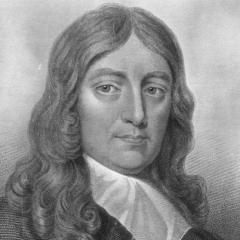
John Milton
John Milton

John Milton, born on December 9, 1608, in London, and died on November 8, 1674, was a renowned English poet and scholar. He is best known for his epic poem 'Paradise Lost,' which has had a profound impact on world literature. more

You May Also Like

“How many pizzas are consumed each year in the United States? How many words have you spoken in your life? How many different peoples names appear in the New York Times each year? How many watermelons would fit inside the U.S. Capital building? What is the volume of all the human blood in the world?”

“Mystery is an inescapable ingredient of mathematics. Mathematics is full of unanswered questions, which far outnumber known theorems and results. It's the nature of mathematics to pose more problems than it can solve. Indeed, mathematics itself may be built on small islands of truth comprising the pieces of mathematics that can be validated by relatively short proofs. All else is speculation.”

“But as the work proceeded I was continually reminded of the fable about the elephant and the tortoise. Having constructed an elephant upon which the mathematical world could rest, I found the elephant tottering, and proceeded to construct a tortoise to keep the elephant from falling. But the tortoise was not more secure than the elephant, and after some twenty years of very arduous toil, I came to the conclusion that there was nothing more that I could do in the way of making mathematical knowledge indubitable.”

“Do you think it's possible that things that seem to be discrete in three dimensions might all be part of the same bigger object in four dimensions? ...What if humanity- that collective noun we so often employ- really is, at a higher level, a singular noun? What it what we perceive in three dimensions as seven billion individual human beings are really all just aspects of one giant being?”

“We admit, in geometry, not only infinite magnitudes, that is to say, magnitudes greater than any assignable magnitude, but infinite magnitudes infinitely greater, the one than the other. This astonishes our dimension of brains, which is only about six inches long, five broad, and six in depth, in the largest heads.”

“We think of the number "five" as applying to appropriate groups of any entities whatsoever - to five fishes, five children, five apples, five days... We are merely thinking of those relationships between those two groups which are entirely independent of the individual essences of any of the members of either group. This is a very remarkable feat of abstraction; and it must have taken ages for the human race to rise to it”