Quotessence
Home / Quotes / Quote by Alexandre Dumas

Quote by Alexandre Dumas

Author

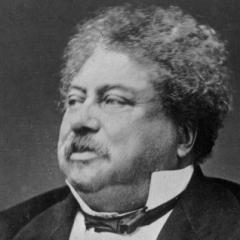
Alexandre Dumas
Alexandre Dumas

Alexandre Dumas, a renowned French writer, was born on July 24, 1802, and died on December 5, 1870. He is famous for his historical and adventure novels, with notable works including 'The Three Musketeers' and 'The Count of Monte Cristo'. more

You May Also Like

“That is the injustice of a woman's lot. A woman has to bring up her children; and that means to restrain them, to deny them things they want, to set them tasks, to punish them when they do wrong, to do all the unpleasant things. And then the father, who has nothing to do but pet them and spoil them, comes in when all her work is done and steals their affection from her.”

“Contemplation in the age of Auschwitz and Dachau, Solovky and Karaganda is something darker and more fearsome than contemplation in the age of the Church Fathers. For that very reason, the urge to seek a path of spiritual light can be a subtle temptation to sin. It certainly is sin if it means a frank rejection of the burden of our age, an escape into unreality and spiritual illusion, so as not to share the misery of other men.”

“AS SOMBRAS DA ALMA. THE SHADOWS OF THE SOUL. The stories others tell about you and the stories you tell about yourself: which come closer to the truth? Is it so clear that they are your own? Is one an authority on oneself? But that isn't the question that concerns me. The real question is: In such stories, is there really a difference between true and false? In stories about the outside, surely. But when we set out to understand someone on the inside? Is that a trip that ever comes to an end? Is the soul a place of facts? Or are the alleged facts only the deceptive shadows of our stories?”

“It wasn't only that you didn't see him anymore, meet him anymore. You saw his absence and encountered it as something tangible. His not being there was like the sharply outlined emptiness of a photo with a figure cut out precisely with scissors and now the missing figure is more important, more dominant than all others.”