Quotessence
Home / Quotes / Quote by Philip Zimbardo

Quote by Philip Zimbardo

Work

The Time Paradox: The New Psychology of Time That Will Change Your Life

This book examines the concept of time perspective, the often-unconscious process by which people divide their experiences into past, present, and future time frames. It discusses how these temporal orientations shape habits, relationships, and life outcomes, drawing on research from psychology and neuroscience. The authors present a framework for understanding different time attitudes and offer insights into how adjusting one's time perspective can lead to more fulfilling and effective living. The work emphasizes that time is not just a physical dimension but a psychological force that can be harnessed for personal change. more

Author
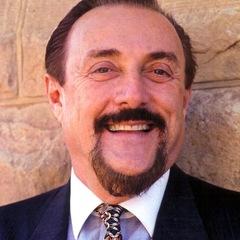
Philip Zimbardo
Philip Zimbardo

Philip Zimbardo is a renowned psychologist, known for his groundbreaking research in prison experiments and personality psychology. His work has revealed the complexity of human behavior and the impact of social environments on individual actions. more

You May Also Like

“We all like to think that the line between good and evil is impermeable--that people who do terrible things, such as commit murder, treason, or kidnapping, are on the evil side of this line, and the rest of us could never cross it. But the Stanford Prison Experiment and the Milgram studies revealed the permeability of that line. Some people are on the good side only because situations have never coerced or seduced them to cross over.”

“In one sense, the Stanford prison study is more like a Greek drama than a traditional experiment, in that we have humanity, represented by a bunch of good people, pitted against an evil-producing situation. The question is, does the goodness of the people overwhelm the bad situation, or does the bad situation overwhelm the good people?”

“Most of us hide behind egocentric biases that generate the illusion that we are special. These self-serving protective shields allow us to believe that each of us is above average on any test of self-integrity. Too often we look to the stars through the thick lens of personal invulnerability when we should also look down to the slippery slope beneath our feet.”

“The [Stanford Prison Experiment] was readily approved by the Human Subjects Research committee because it seemed like college kids playing cops and robbers, it was an experiment that anyone could quit at any time and minimal safeguards were in place. You must distinguish hind sight from fore sight, knowing what you know now after the study is quite different from what most people imagined might happen before the study began.”

“As we have come to understand the psychology of evil, we have realized that such transformations of human character are not as rare as we would like to believe. Historical inquiry and behavioral science have demonstrated the "banality of evil" -- that is, under certain conditions and social pressures, ordinary people can commit acts that would otherwise be unthinkable.”