Quotessence
Home / Quotes / Quote by Nikolai Berdyaev

Quote by Nikolai Berdyaev

“Utopias now appear much more realizable than one used to think. We are now faced with a different new worry: How to prevent their realization.”

Quote by Nikolai Berdyaev

Author
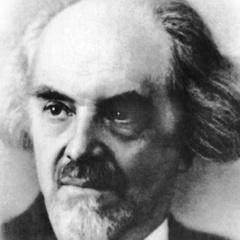
Nikolai Berdyaev
Nikolai Berdyaev

Russian philosopher born on March 18, 1874, and died on March 23, 1948. Nikolai Berdyaev is known for his contributions to religious philosophy, existentialism, and liberalism. more

You May Also Like

“Now, the Libertarian Party, is a *capitalist* party. It's in favor of what *I* would regard a *particular form* of authoritarian control. Namely, the kind that comes through private ownership and control, which is an *extremely* rigid system of domination - people have to... people can survive, by renting themselves to it, and basically in no other way... I do disagree with them *very* sharply, and I think that they are not..understanding the *fundamental* doctrine, that you should be free from domination and control, including the control of the manager and the owner.”

“There isn't much point arguing about the word "libertarian." It would make about as much sense to argue with an unreconstructed Stalinist about the word "democracy" - recall that they called what they'd constructed "peoples' democracies." The weird offshoot of ultra-right individualist anarchism that is called "libertarian" here happens to amount to advocacy of perhaps the worst kind of imaginable tyranny, namely unaccountable private tyranny. If they want to call that "libertarian," fine; after all, Stalin called his system "democratic." But why bother arguing about it?”

“[Libertarians] don't denounce what the state does, they just object to who's doing it. This is why the people most victimized by the state display the least interest in libertarianism. Those on the receiving end of coercion don't quibble over their coercers' credentials. If you can't pay or don't want to, you don't much care if your deprivation is called larceny or taxation or restitution or rent. If you like to control your own time, you distinguish employment from enslavement only in degree and duration.”

“... the place where [adults] pass the most time and submit to the closest control is at work. Thus, without even entering into the question of the world economy's ultimate dictation within narrow limits of everybody's productive activity, it's apparent that the source of the greatest direct duress experienced by the ordinary adult is _not_ the state but rather the business that employs him. Your foreman or supervisor gives you more or-else orders in a week than the police do in a decade.”

“Some people giving orders and others obeying them: this is the essence of servitude. Of course, as Hospers smugly observes, "one can at least change jobs," but you can't avoid having a job - just as under statism one can at least change nationalities but you can't avoid subjection to one nation-state or another. But freedom means more than the right to change masters.”