Quotessence
Home / Quotes / Quote by Philip James Bailey

Quote by Philip James Bailey

Work

Festus: a poem

Festus: a poem is a literary composition that employs the art of poetry to delve into the character or concept of Festus, offering readers a reflective and expressive narrative. more
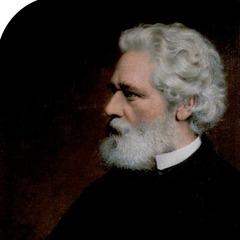
Author

Philip James Bailey
Philip James Bailey

Philip James Bailey (April 22, 1816 – September 6, 1902) was an English poet of the Victorian era, best known for his epic poem 'Festus'. Born in Nottingham, he studied law at the University of Glasgow but chose poetry over a legal career. 'Festus', published in 1839, is a philosophical and religious epic exploring themes of faith, love, and redemption, which gained considerable popularity and went through multiple editions. Influenced by Byron and Shelley, Bailey's work reflects Romantic idealism and Victorian moral concerns. Despite later works like 'The Angel World' and 'The Mystic', he never replicated the success of 'Festus'. He spent most of his life in Nottingham and Jersey, and died in relative obscurity. Today, he is remembered as a minor but notable figure in Victorian poetry. more

You May Also Like

“A ground frequently taken by Christian theologians is that the progress and civilization of the world are due to Christianity; and the discussion is complicated by the fact that many eminent servants of humanity have been nominal Christians, of one or other of the sects. My allegation will be that the special services rendered to human progress by these exceptional men have not been in consequence of their adhesion to Christianity, but in spite of it, and that the specific points of advantage to human kind have been in ratio of their direct opposition to precise Biblical enactments.”

“Since the primary motive of the evil is disguise, one of the places evil people are most likely to be found is within the church. What better way to conceal one's evil from oneself, as well as from others, than to be a deacon or some other highly visible form of Christian within our culture? ... I do not mean to imply that the evil are anything other than a small minority among the religious or that the religious motives of most people are in any way spurious. I mean only that evil people tend to gravitate toward piety for the disguise and concealment it can offer them.”

“Here is the infallible test. Imagine yourself in a situation where you are alone, wholly alone on earth, and you are offered one of the two, books or men. I often hear men prizing their solitude but that is only because there are still men somewhere on earth even though in the far distance. I knew nothing of books when I came forth from the womb of my mother, and I shall die without books, with another human hand in my own. I do, indeed, close my door at times and surrender myself to a book, but only because I can open the door again and see a human being looking at me.”

“I have hitherto followed the lines marked out by the Theist in his attempt to prove that there exists a mind behind natural phenomena, and that the universe as we have it is, at least generally, an evidence of a plan designed by this mind. I have also pointed out that the only datum for such a conclusion is the universe we know. We must take that as a starting point. We can get neither behind it nor beyond it. We cannot start with God and deduce the universe from his existence; we must start with the world as we know it, and deduce God from the world.”

“We are a people of many races, many faiths, creeds, and religions. I do not think that the men who made the Constitution forbade the establishment of a State church because they were opposed to religion. They knew that the introduction of religious differences into American life would undermine the democratic foundations of this country. What holds for adults holds even more for children, sensitive and conscious of differences. I certainly hope that the Board of Education will think very, very seriously before it introduces this division and antagonism in our public schools.”

“There comes a moment during which almost every girl or boy falls into melancholy; they are tormented by a vague inquietude which rests on everything and finds nothing to calm it. They seek solitude; they weep; the silence to be found in cloister attracts them: the image of peace that seems to reign in religious houses seduces them. They mistake the first manifestations of a developing sexual nature for the voice of God calling them to Himself; and it is precisely when nature is inciting them that they embrace a fashion of life contrary to nature's wish.”