Quotessence
Home / Quotes / Quote by Terry Teachout

Quote by Terry Teachout

“I've always loved opera; it never occurred to me that I would write a proper libretto. One of my closest friends is a composer, Paul Moravec, and a few years ago, Paul and I were at lunch, and I said to him, "you really have to write an opera." So, he says very casually to me, "I'll do it if you write the libretto." Well, little did I know that the within a couple of years we would end up getting a commission from the Santa Fe Opera to write an opera together, "The Letter," which turned out to be the most successful commissioned opera in the history of the Santa Fe Opera.”

Quote by Terry Teachout

Author
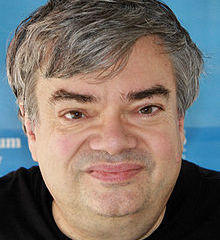
Terry Teachout
Terry Teachout

Terry Teachout is a renowned American cultural critic and writer. Known for his profound insights into the fields of music, theater, and literature, Teachout was born on February 6, 1956. more

You May Also Like

“Direction is the most invisible part of the theatrical art. It's not like the conductor in the symphony orchestra performance because he's standing in front of you waiving his arms. You now what he's doing. You don't know what the director is doing unless you know a lot about theater and even then you can only deduce it. You know it when you go to rehearsal. You really know it when they are rehearsing something of yours. I learned more in the rehearsals for The Letter than I have ever dreamed of know in the theater as a critic. If it doesn't make me a better critic, I'm an idiot.”

“The most important thing to remember is that the composer is a senior partner. You cannot force a subject on a composer if it doesn't inspire him. He has to take the lead, you are an enabler, and you are creating the enabling conditions under which he can write great music. Your words are secondary. Many librettists in opera collaborations in the past have forgotten this, or not known it, or refuse to accept it and tried to get out in front of the creative process and it just doesn't work that way.”

“And Paul Moravec, not being a theater person, would always trust me when I said things that I am like, "you're going to need another 10 seconds of music year to get them across the stage." But I always knew that the people were going to be coming to hear his music of which my words are going to be a part. It was clear that he wanted to go and direction A., and I wanted to go and direction B. We would've gone and direction A. That's the most important piece of advice I can give to anybody who finds themselves in an opera, or musical comedy situation like that.”

“The papers that flourish will be papers that serve a national audience. Papers that have figured out how to make the transition to the electronic platform that aren't simply providing a duplicate experience of the words on paper experience, but are doing something that arises organically from the new electronic medium. It's really just a matter of finding the right platforms for the way people want to read newspapers. I mean, maybe it will be the iPhone. But one way or another, newspapers on paper are just not really going to exist to any significant degree within a decade.”

“There will be this mix of people like me who write for major national newspapers and amateur critics, practitioner critics, whose primary way of distributing what they talk about is through blogs and on the web. The line between professional and amateur criticism will become increasingly blurred. The problem here is that if you want to do this for a living, you have to be able to earn a living doing it.”

“Virgil Thomson, the great classical music critic, who was also a composer, but said that criticism was the only antidote he knew to pay publicity. Critics at their best are independent voices people take seriously their responsibility to see as many things as they can see, put them in the widest possible perspective, educate their readers, I really do think of myself as a teacher. Newspapers that don't carry arts criticism at all while not fulfill this function. And probably their arts journalism will be deprived as a result.”

“Your regional newspaper, and I like to use this example, in your local museum buys a Picasso, that's news especially if they've spent $10 million for it. But if you don't have a credit on your staff then you don't have anybody who's confident to say whether or not it was a good Picasso, might even be aware of the fact that there are bad Picassos. Arts journalists who don't have the experience of criticism, the skill of criticism, don't think in terms of critical evaluation are not going to be as good a journalist as they might be.”

“Most people are hurt deeply by betrayals in relationships. It might be better to really get up against and sort of contact that caring, and maybe take a more loving stance even with your own pain, and keep your feet moving towards what you really want, because the cost in terms of intimacy and connection and caring that comes when you try not to be vulnerable, when you're constantly looking out for betrayals of trust, is too great. It makes it very hard to have relationships of the kind that you really want. One, look where the pain is. Flip it over; you'll find that's where the values are.”

“There are times when you felt especially important to another person, or cared about or loved or accepted. Well, loving relationships aren't something you can have like a precious little jewel you put in a box and then put on your shelf. It's something you walk towards. And there's always difficulties; there's always pain in relationships. But you can keep walking towards that beacon in the distance. That process, that journey, is called life. And if you're moving towards the things that you value, life is more vital, flowing; it's more empowering.”