Quotessence
Home / Quotes / Quote by Philip Roth

Quote by Philip Roth

“Suicide is the role you write for yourself. You inhabit it and you enact it. All carefully staged -- where they will find you and how they will find you. But one performance only.”

Quote by Philip Roth

Author
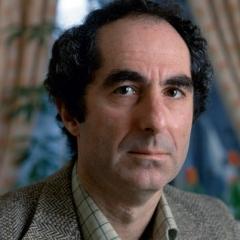
Philip Roth
Philip Roth

Philip Roth (1933-2018) was one of America's most influential contemporary novelists, renowned for his profound explorations of Jewish-American identity, sexuality, politics, and the human condition. His breakthrough work, "Portnoy's Complaint" (1969), became a landmark in American literature. Roth received two National Book Awards and was a multiple-time Pulitzer Prize finalist. Over his six-decade career, he published more than 30 books that significantly shaped American fiction. He passed away in New York City on May 22, 2018, at age 85. more

You May Also Like

“Any satirist writing a futuristic novel who had imagined a President Reagan during the Eisenhower years would have been accused of perpetrating a piece of crude, contemptible, adolescent, anti-American wickedness, when, in fact, he would have succeeded, as prophetic sentry, where Orwell failed.”

“When you decide 'to be a writer,' you don't have the faintest idea of what the work is like. When you begin, you write spontaneously out of your limited experience of both the unwritten world and the written world. You're full of naïve exuberance. 'I am a writer!' Rather like the excitement of 'I have a lover!' But working at it nearly every day for fifty years – whether it is being the writer or being the lover – turns out to be an extremely taxing job and hardly the pleasantest of human activities.”

“The thought of the novelist lies not in the remarks of his characters or even in their introspection but in the plight he has invented for his characters - in the juxtaposition of those characters and in the lifelike ramifications of the ensemble they make: their density, their substantiality, their lived existence actualized in all its nuanced particulars, is in fact his thought metabolized.”

“You asked if I thought my fiction had changed anything in the culture and the answer is no. Sure, there's been some scandal, but people are scandalized all the time; it's a way of life for them. It doesn't mean a thing. If you ask if I want my fiction to change anything in the culture, the answer is still no. What I want is to possess my readers while they are reading my book — if I can, to possess them in ways that other writers don't. Then let them return, just as they were, to a world where everybody else is working to change, persuade, tempt, and control them.”