“An act cannot be defined by the end sought by the actor, for an identical system of behaviour may be adjustable to too many different ends without altering its nature.”
Quote by Emile Durkheim
Work
Suicide: A Study in Sociology
Emile Durkheim's seminal 1897 study pioneered sociological research methods by analyzing statistical data on suicide rates across various European countries. The work establishes that suicide is not merely an individual psychological act but is influenced by collective social factors including religious affiliation, marital status, and degree of social integration. Durkheim identifies distinct typologies of suicide—egoistic, altruistic, anomic, and fatalistic—each linked to different social conditions. The book demonstrates how suicide rates correlate with the strength of social bonds, religious traditions, and economic stability within communities. This influential work laid methodological groundwork for empirical sociology and remains a cornerstone text in the discipline, demonstrating how individual behaviors can be understood through the lens of social structures and collective forces. more
Author
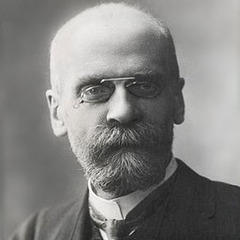
Emile Durkheim
Émile Durkheim, a French sociologist born on April 15, 1858, and died on November 15, 1917, is considered the father of sociology. His work profoundly influenced the understanding of social structure, social functions, and collective consciousness. more
You May Also Like
“Human nature is not nearly as bad as it has been thought to be.”
Source: Toward a Psychology of Being
Source: Nature
Source: The Division of Labor in Society
“The first and most basic rule is to consider social facts as things.”
Source: The Descent of Man, and Selection in Relation to Sex