“No aphorism is more frequently repeated in connection with field trials, than that we must ask Nature few questions, or, ideally, one question, at a time. The writer is convinced that this view is wholly mistaken. Nature, he suggests, will best respond to a logical and carefully thought out questionnaire; indeed, if we ask her a single question, she will often refuse to answer until some other topic has been discussed.”
Quote by Ronald Fisher
Author
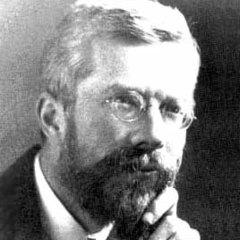
Ronald Fisher
Ronald Fisher (February 17, 1890 – July 29, 1962) was a British statistician, geneticist, and evolutionary biologist, regarded as one of the founders of modern statistics. He developed key statistical methods such as analysis of variance, maximum likelihood estimation, and Fisher's exact test, and applied statistical theory to genetics and evolutionary biology, contributing to the modern evolutionary synthesis. Fisher studied mathematics and physics at Cambridge University, later worked at Rothamsted Experimental Station and University College London, and spent his final years in Australia. His work profoundly influenced experimental design, biostatistics, and population genetics, though his support for eugenics remains controversial. more
You May Also Like
Source: New Essays Concerning Human Understanding with an Appealing...: Transtated from the Original Latin, French and German Writeen
“Nothing is lost and nothing is created in the operations of art as those of nature.”
“Nature's fortuitous manifestation of her purposeless objectionableness.”
Source: The Unabridged Devil's Dictionary
“Our lifetime may be the last that will be lived out in a technological society.”
Source: Principles of Political Economy: With Some of Their Applications to Social Philosophy