Quotessence
Home / Quotes / Quote by Gilbert K. Chesterton

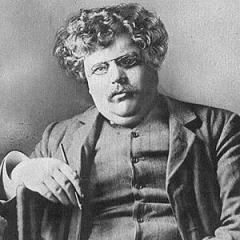
Quote by Gilbert K. Chesterton

“The artistic temperament is a disease that affects amateurs. Artists of a large and wholesome vitality get rid of their art easily, as they breathe easily or perspire easily. But in artists of less force, the thing becomes a pressure, and produces a definite pain, which is called the artistic temperament.”

Quote by Gilbert K. Chesterton

Work

Heretics

Heretics is a thought-provoking novel that delves into the complexities of religious doctrine and the individual's struggle to reconcile personal beliefs with established dogma. more

Author

Gilbert K. Chesterton

Gilbert K. Chesterton was an English writer, critic, and theologian, born on May 29, 1874, and died on June 14, 1936. Known for his unique literary style and profound philosophical thinking, Chesterton's works spanned a variety of genres, including novels, poetry, drama, and criticism. more

You May Also Like

“If the Revolution has the right to destroy bridges and art monuments whenever necessary, it will stop still less from laying its hand on any tendency in art which, no matter how great its achievement in form, threatens to disintegrate the revolutionary environment or to arouse the internal forces of the Revolution, that is, the proletariat, the peasantry and the intelligentsia, to a hostile opposition to one another. Our standard is, clearly, political, imperative and intolerant.”

“There is the falsely mystical view of art that assumes a kind of supernatural inspiration, a possession by universal forces unrelated to questions of power and privilege or the artist's relation to bread and blood. In this view, the channel of art can only become clogged and misdirected by the artist's concern with merely temporary and local disturbances. The song is higher than the struggle.”

“Modern pictures are, no doubt, delightful to look at. At least, some of them are. But they are quite impossible to live with; they are too clever, too assertive, too intellectual. Their meaning is too obvious, and their method too clearly defined. One”