Quotessence
Home / Quotes / Quote by Georgette Heyer

Quote by Georgette Heyer

“As usual, he was richly, if somewhat negligently dressed. Miss Challoner, incurably neat, wondered that a carelessly tied cravat and unpowdered hair could so well become a man. Not a doubt but that the Marquis had an air.”

Quote by Georgette Heyer

Work

Devil's Cub

This book delves into a richly detailed fantasy universe, where the character Devil's Cub navigates a complex web of political intrigue and magical conflict. The narrative follows Devil's Cub's journey as they rise to prominence, facing moral dilemmas and testing the boundaries of their own nature. more
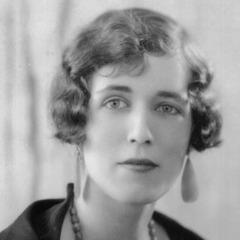
Author

Georgette Heyer
Georgette Heyer

Georgette Heyer, born on August 16, 1902, was a renowned British novelist. Known for her historical novels and intricate love stories, Heyer's works are particularly famous for their depiction of the customs and habits of the British upper class in the 18th century. Her writing style is unique, characterized by its wit and humor, which has won her a large following among readers. more

You May Also Like

“Do that thing you always wanted to do “someday” in the future: get on a plane in your Jackie O shift dress and shades, take a train across Europe wearing red lipstick, buy that sporty two-seater car, spend your money on perfume. Otherwise you might wake up one day with a husband and kids and wonder what you did with all that free time you once had. And if you’re already experiencing the domestic bliss of family life, savour every moment.”

“The womb is where babies are created, and grown, and from where they are birthed. It is the home of our creativity, the wellspring of our vital feminine energies. The womb is the matrix from which our life force rises and to which it returns. It is the hub of our energetic and physical bodies. The womb is also where we experience death. Our moon blood, our menstruation, is a sign that an ovum (...) has died without being fertilized by the sperm (...); it passes out of our bodies with the now unneeded uterine lining that the womb created for the possibility of growing a baby. Without fertilization, this living-nourishing matrix dies and leaves our bodies in our monthly flow (which by the way is one of the most concentrated forms of śakti in our bodies).”

“I mention Jackie mostly because I want to be assured that I inhabit the same universe as other people; that I am not alone on a distant shore. Jackie glues me to this world—most effectively when I can find a way to mention her name or her attributes, when I can find a pretext, however frail, to introduce her into a conversation, even at the risk of non sequitur, bathos, or incoherence.”

“Without Al, Mary Frances discovered what she did alone. She liked to cook for herself, to assemble a meal of things he would never consider worth a mealtime- shad roe and toast, soft-set eggs, hearts of celery and palm with a quick yellow mayonnaise, a glass of wine, an open book in her lap, and the radio on. The elements that mattered most were the simple ones: butter, salt, a thick plate of white china and a delicate glass, the music faint, the feel of paper in her hand, and the knowledge that there was more, always more book to read, more wine if she liked it, some cold fruit in the refrigerator when she was hungry again, and the hours upon hours to satisfy herself.”

“She browned onions and garlic, and from the pot on the windowsill, chopped a few winter-sad leaves of tarragon. The smell was green and strong, and she thought of spring. Spring in Dijon, when she and Al would hike into the mountains with the Club Alpin, the old women forever chiding her tentative steps, her newborn French: la petite violette, violette américaine. She would turn back to Al, annoyed, and he would laugh. Hardly his delicate flower. When they stopped for lunch, it was Mary Frances with the soufflé of calves' brains, whatever was made liver or marrow, ordering enough strong wine that everyone was laughing. The way home, the women let her be. If she wanted calves' brains now, she wouldn't even know where to begin to look or how to pay. She and Al seemed to be living on vegetables and books, tobacco, quiet. She blanched a bunch of spinach and chopped it. She beat eggs with the tarragon, heated the skillet once again. There was a salad of avocados and oranges. There was a cold bottle of ale and bread. Enough, for tonight.”

“The market smelled of hay and roasted nuts; she bought a newspaper cone of almonds from a woman stirring them over an open fire. She bought thick sandy leeks, a rope of garlic and a pound of tomatoes; she bought a long batard of sourdough bread, a dozen bluish speckled eggs, a jar of cream, because now she had a refrigerator and could keep such things for more than an hour or two. She lifted the paper lid of the cream and tasted it, wiping her mouth with the back of her hand; she remembered the pillowy clouds of Gruyère grated onto her piece of waxed paper at Les Halles, the cheese maker young and handsome and milk-fed himself; he tried to teach her the French for being in love with him: mon cocotte, mon chouchou, ma petit lapin, Madame, s'il vous plaît. She walked the stalls, and on the edge of the market, a fishmonger laid out his catch on two blocks of ice: strange curled squids and spider crabs, silvery piles of sardines, their eyes still sparkling, thick slabs of some white-meated fish, its head as big as a dinner plate.”