Quotessence
Home / Quotes / Quote by Lawren Harris

Quote by Lawren Harris

“No man can roan or inhabit the Canadian North without it affecting him, and the artist, because of his constant habit of awareness and his discipline in expression, is perhaps more understanding of its moods and spirit than others are. He is thus better equipped to interpret it to others, and then, when her has become one with its spirit, to create living works in their own right, by using forms, colors, rhythms and moods, to make a harmonious home for the imaginative and spiritual meaning it has evoked in him.”

Quote by Lawren Harris

Work

The Best of the Group of Seven

Browse quotes and source details for this work. more

Author
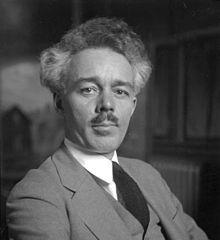
Lawren Harris
Lawren Harris

Lawren Harris, born on October 23, 1885, and died on January 29, 1970, was a Canadian painter known for his paintings of the Canadian north. His work, characterized by cold tones and geometric abstraction, has had a profound impact on the Canadian art scene. more

You May Also Like

“Because this law could mean so much or so little, it held potential for causing great mischief in the world of art and politics. We needed to reduce its uncertainty, and the best way to do that, I believed, was to force a court to interpret it, which would either void or narrow the law. To make it as broad a target as possible and to assure that someone would sue us, I reproduced the Helms amendment verbatim in the terms and conditions for grant recipients. It could not be ignored there, and if it was to be declared unconstitutional, it had to appear where the courts could not ignore it either.”

“In 2004, the Animals in War monument outside Hyde Park in London was created by the English sculptor David Backhouse. The monument includes two life-sized bronze mules carrying supplies, as well as statues of a horse and a dog and bas-relief carvings of other animals such as camels, elephants and birds who have been used in warfare. The inscription reads: *Animals in War. This monument is dedicated to all the animals that served and died alongside British and allied forces in wars and campaigns throughout time. They had no choice.* ~ John Sorenson”

“I know not why, but all the noblest arts hold in perfection but for a very little moment. They soon reach a height from which they begin to decline, and when they have begun to decline it is a pity that they cannot be knocked on the head; for an art is like a living organism - better dead than dying. There is no way of making an aged art young again; it must be born anew and grow up from infancy as a new thing, working out its own salvation from effort to effort in all fear and trembling.”

“In the end, this volume should be read a s a collection of love stories, Above all, they are tales of love, not the love with which so many stories end – the love of fidelity, kindness and fertility – but the other side of love, its cruelty, sterility and duplicity. In a way, the decadents did accept Nordau's idea of the artist as monster. But in nature, the glory and panacea of romanticism, they found nothing. Theirs is an aesthetic that disavows the natural and with it the body. The truly beautiful body is dead, because it is empty. Decadent work is always morbid, but its attraction to death is through art. What they refused was the condemnation of that monster. And yet despite the decadent celebration of artifice, these stories record art's failure in the struggle against natural horror. Nature fights back and wins, and decadent writing remains a remarkable account of that failure.”