Quotessence
Home / Quotes / Quote by Plato

Quote by Plato

“My child, Star, you gaze at the stars, and I wish I were the firmament that I might watch you with many eyes.”

Quote by Plato

Author
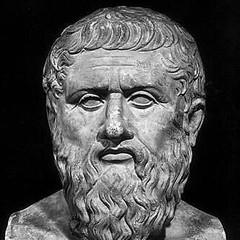
Plato
Plato

Plato (428 BC - 348 BC) was a prominent Greek philosopher, one of the most influential figures in Western philosophy. He founded the Academy, which was the first institution of higher education in the Western world. Plato's philosophy, centered around the theory of Forms, emphasized the importance of reason and morality. more

You May Also Like

“Discussion of translations of poetry usually confuses kind with value. One type of translation is thought to be intrinsically superior to others, be it free translation, close translation, poetry after, imitation, metaphrase, paraphrase, etc. In the critic’s mind, the quality of a translation often depends on how closely it conforms to his own preferred method. This error of descriptive rather than evaluative criticism—where kind determines value—probably occurs more often in regard to poetry in translation than in any other form of literary criticism. But in the end, method is secondary, and determines neither the virtues nor sins of a poem. The translator need only clearly and honestly indicate his method—whatever it is—and then be judged, not on this choice, but on the quality of the new poem. If the new poem is good, the translator as artist will be performing his ancient function of retelling, in his own form, a given content he has overheard from the immediate or the distant past.”

“But it is said that certain memorable lines or phrases cannot be expressed in any other language. Yet it should also be said that while at times we must lose, at others we gain, and the good translator will take advantage of the text, improving upon the weaker lines of the original, while doing his best with the best. More important, it is forgotten that translation provides an opportunity for languages to interact upon each other, for one tongue to alter and enrich the possibilities of expression in another. In the past some translated works have changed both literary language and tradition: notably the Petrarchan sonnet, Luther's Bible, Judith Gautier's haiku. Milton went as naturally to the King James Version for vocabulary as Shakespeare turned to Holinshed for plots; when Rimbaud's Illuminationswere translated into English, the tradition of our literature was expanded to the extent that diction and subject never before found in English were presented to us. In a word, the quality of a work in translation is dependent on the translator's skills. His forgery is not necessarily better or worse than the original or than other works in his own language; it is only necessarily different—and here the difference, if new and striking, may extend the verbal and thematic borders of his own literature. And as a corollary to his work the new poem may also be seen as an essay into literary criticism, a reading, a creative explication de texte.”

“But it is said that certain memorable lines or phrases cannot be expressed in any other language. Yet it should also be said that while at times we must lose, at others we gain, and the good translator will take advantage of the text, improving upon the weaker lines of the original, while doing his best with the best. More important, it is forgotten that translation provides an opportunity for languages to interact upon each other, for one tongue to alter and enrich the possibilities of expression in another. In the past some translated works have changed both literary language and tradition: notably the Petrarchan sonnet, Luther's Bible, Judith Gautier's haiku. Milton went as naturally to the King James Version for vocabulary as Shakespeare turned to Holinshed for plots; when Rimbaud's Illuminations were translated into English, the tradition of our literature was expanded to the extent that diction and subject never before found in English were presented to us. In a word, the quality of a work in translation is dependent on the translator's skills. His forgery is not necessarily better or worse than the original or than other works in his own language; it is only necessarily different—and here the difference, if new and striking, may extend the verbal and thematic borders of his own literature. And as a corollary to his work the new poem may also be seen as an essay into literary criticism, a reading, a creative explication de texte.”