Quotessence
Home / Quotes / Quote by Muriel Spark

Quote by Muriel Spark

“Six years previously, Miss Brodie had led her new class into the garden for a history lesson underneath the big elm. On the way through the school corridors they passed the headmistress's study. The door was wide open, the room was empty. 'Little girls,' said Miss Brodie, 'come and observe this.' They clustered round the open door while she pointed to a large poster pinned with drawing-pins on the opposite wall within the room. It depicted a man's big face. Underneath were the words 'Safety First'. 'This is Stanley Baldwin who got in as Prime Minister and got out again ere long,' said Miss Brodie. 'Miss Mackay retains him on the wall because she believes in the slogan "Safety First". But Safety does not come first. Goodness, Truth and Beauty come first. Follow me.”

Quote by Muriel Spark

Work

The Prime of Miss Jean Brodie

This novel delves into the life of Miss Jean Brodie, a charismatic and unconventional teacher at a girls' school in Edinburgh. The story explores her complex relationship with her students and her impact on their lives, as well as her own personal struggles and desires. more

Author
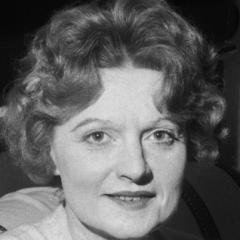
Muriel Spark
Muriel Spark

Muriel Spark was a Scottish author known for her wit and sharp social commentary. Born on February 1, 1918, in Edinburgh, Scotland, she passed away on April 13, 2006. Spark's writing often delved into themes of identity, morality, and the human condition, with her novel 'The Prime of Miss Jean Brodie' being one of her most celebrated works. more

You May Also Like

“The human brain is incredible in its capacity to heal and rewire itself. The human brain can be shaped and trained to be more resilient, calm, compassionate and alert—we can condition ourselves to be successful. Through mindfulness meditation, we can literally re-wire our brains through new experiences, which modify our neural network and our neural chemistry. Mindfulness also enhances gamma synchrony and improves the function of the human brain.”

“Maybe (Taoist story) A classic ancient story illustrates the importance of equanimity and emotional resilience beautifully. Once upon a time, there was a wise old farmer who had worked on the land for over 40 years. One morning, while walking to his stable, he noticed that his horse had run away. His neighbours came to visit and sympathetically said to the farmer, “Such bad luck”. “Maybe,” the farmer replied. The following morning, however, the horse returned, bringing with it three other wild horses. “Such good luck,” the neighbours exclaimed. “Maybe,” the farmer replied. The following afternoon, his son tried to ride one of the untamed horses and was thrown off, causing him to break his leg. The neighbours came to visit and tried to show sympathy and said to the farmer, “how unfortunate”. “Maybe,” answered the farmer. The following morning military officials came to the farmer’s village to draft young men into the army to fight in a new war. Observing that the farmer’s son’s leg was broken, they did not draft him into the war. The neighbours congratulated him on his good luck and the farmer calmly replied, “Maybe”.”

“The worst possible approach to a problem is waiting until it becomes overwhelming or irreversible, and that is exactly what many people do. They put dealing with stress on the backburner until they start to experience all the worst symptoms of stress, and by then, it may be too late!”

“When the weeks have built up with frustration and immense stress and one of your co-workers, a manager or an employee triggers irritation or angers you, knowing how to respond in a mindful way can pay huge dividends. Knowing how to not take other people’s emotional baggage personally and intuitively sensing when to bring up concerns and when not to is an expression of emotional intelligence. This is all possible if we are being truly mindful.”

“Habits equal autopilot. Take brushing your teeth for example. Once that becomes a habit, you don’t have to write positive affirmations or remind yourself constantly to brush your teeth. It is simply a habitual part of what you do every day. That is why I emphasize the five habits of stress management, not the five rules or the five goals. If you make these five habits an essential part of your life, then you will be able to manage stress effectively.”

“Everyone knows that a quick-fix usually doesn’t work, yet we have all been sold on the idea time and time again. Most of us would like to believe in miracle drugs and fast relief. The truth is that most of the quick fixes for stress focus on temporary relief from tension or pain. Temporary, as in, the problem will return with a vengeance. This doesn’t mean we should never take drugs to alleviate tension or pain, it just means that taking drugs is not a viable permanent solution; it’s just a temporary relief.”

“If you have ever procrastinated and then found yourself energized to complete a task at the last minute, then you have used the beneficial aspect of the fight or flight response (not the procrastinating part, but the energizing part). You see, with all its negative long term effects, the fight or flight response still gives us energy, and if we know how to use that energy, then stress is potentially good, at least in the short term.”

“Stress, burnout and strain on the human heart are all increasingly taking their toll for millions of hardworking people. However, even someone who is working in a job that simply ‘pays the bills’ can turn mundane and stressful tasks into pleasant activities with a slight adjustment in attitude and by adopting a daily mindful practice.”