Quotessence
Home / Quotes / Quote by Theodor Adorno

Quote by Theodor Adorno

Work

Minima Moralia: Reflections on a Damaged Life

Hermann Broch's Minima Moralia is a collection of philosophical essays that delve into the intricacies of human existence and the challenges of contemporary life. The essays, written in German and translated into English, are characterized by their introspective nature and their exploration of the author's personal experiences. Broch's work is known for its depth of thought and its ability to connect philosophical ideas with everyday life. more

Author
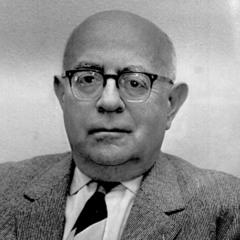
Theodor Adorno
Theodor Adorno

Theodor Adorno was a German sociologist, philosopher, and musicologist. He is renowned for his critical theory, co-developed with Max Horkheimer and other members of the Frankfurt School. Adorno's research focused on the analysis of modern society, culture, and the influence of mass culture on individuals. more

You May Also Like

“The film has succeeded in transforming subjects so indistinguishably into social functions, that those wholly encompassed, no longer aware of any conflict, enjoy their own dehumanization as something human, as the joy of warmth. The total interconnectedness of the culture industry, omitting nothing, is one with total social delusion.”

“To live in the universe of high modernity is to live in an environment of chance and risk, the ineveitable concomitants of a system geared to the domination of nature and the reflexive making of history. Fate and destiny have no formal part to play in such a system, which operates (as a matter of principle) via what I shall call open human control of the natural and social worlds.”

“It is becoming plain that our liberal regime of equality and personal freedom depends, more than most theorists of liberalism have been willing to admit, on the existence and support of certain social assumptions and practices: the belief that each and every human being possesses great and inherent value, the willingness to respect the rights of others even at the cost of some disadvantages to one's self, the ability to defer some immediate benefits for the sake of long-range goals, and a regard for reason-giving and civility in public discourse.”

“Social historians of the future no doubt will be amused by the fact that we late-twentieth-century Americans found it acceptable to discuss publicly in detail the most intimate aspects of personal life, while maintaining an almost prudish reserve concerning the political significance of family life.”

“We live in a profoundly nonintellectual culture, made all the worse by a passive hedonism abetted by the spread of wealth and its dissipation into countless electronic devices that impart the latest in entertainment and supposed information - all in short (and loud) doses of "easy listening".”

“It indicates a person who has not only good manners but who possesses a sense of balance, a sure mastery of himself, a moral discipline that permits him to subordinate voluntarily his own selfish interest to the wider interests of the society in which he lives. The gentleman, therefore is a cultural person in the noblest sense of the word, if by culture we mean not simply wealth of intellectual knowledge but also the ability to fulfil one's duty and understand one's fellow man by respecting / every principle, every opinion, every faith that is sincerely professed.”