Quotessence
Home / Quotes / Quote by G. H. Hardy

Quote by G. H. Hardy

“I do not remember having felt, as a boy, any passion for mathematics, and such notions as I may have had of the career of a mathematician were far from noble. I thought of mathematics in terms of examinations and scholarships: I wanted to beat other boys, and this seemed to be the way in which I could do so most decisively.”

Quote by G. H. Hardy

Work

A Mathematician's Apology

This work delves into the essence of mathematics, discussing its purpose, the motivations of mathematicians, and the significance of mathematical inquiry. The author reflects on the challenges and rewards of a life dedicated to mathematics, offering insights into the intellectual and personal aspects of the field. more

Author
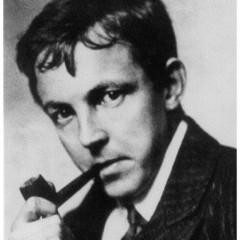
G. H. Hardy
G. H. Hardy

G. H. Hardy was a renowned British mathematician known for his contributions to number theory and mathematical analysis. Born on February 7, 1877, he passed away on December 1, 1947. Hardy is respected for his unique mathematical style and profound insights into mathematical problems. more

You May Also Like

“I myself, a professional mathematician, on re-reading my own work find it strains my mental powers to recall to mind from the figures the meanings of the demonstrations, meanings which I myself originally put into the figures and the text from my mind. But when I attempt to remedy the obscurity of the material by putting in extra words, I see myself falling into the opposite fault of becoming chatty in something mathematical.”

“It may be true that people who are merely mathematicians have certain specific shortcomings; however that is not the fault of mathematics, but is true of every exclusive occupation. Likewise a mere linguist, a mere jurist, a mere soldier, a mere merchant, and so forth. One could add such idle chatter that when a certain exclusive occupation is often connected with certain specific shortcomings, it is on the other hand always free of certain other shortcomings.”

“Mathematical knowledge is not-as all Cambridge men are surely aware-the result of any special gift. It is merely the development of those conceptions of form and number which every human being possesses; and any person of average intellect can make himself a fair mathematician if he will only pay continuous attention; in plain English, think enough about the subject.”

“Mathematicians may flatter themselves that they possess new ideas which mere human language is as yet unable to express. Let them make the effort to express these ideas in appropriate words without the aid of symbols, and if they succeed they will not only lay us laymen under a lasting obligation, but, we venture to say, they will find themselves very much enlightened during the process, and will even be doubtful whether the ideas as expressed in symbols had ever quite found their way out of the equations into their minds.”

“The calculus of probabilities, when confined within just limits, ought to interest, in an equal degree, the mathematician, the experimentalist, and the statesman.”