Quotessence
Home / Quotes / Quote by Alexander Fraser Tytler

Quote by Alexander Fraser Tytler

“No republic has long outlived the discovery by a majority of its people that they could vote themselves largesse from the public treasury.”

Quote by Alexander Fraser Tytler

Author
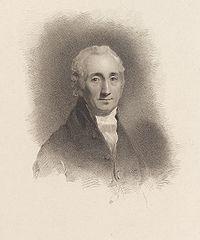
Alexander Fraser Tytler

Alexander Fraser Tytler (October 15, 1747 - January 5, 1813) was a Scottish historian and writer, renowned for his extensive research into the history of Scotland and England during the late 18th and early 19th centuries. more

You May Also Like

“Jazz is the music of the body. The breath comes through brass. It is the body's breath, and the strings' wails and moans are echoes of the body's music. It is the body's vibrations which ripple from the fingers. And the mystery of the withheld theme, known to jazz musicians alone, is like the mystery of our secret life. We give to others only peripheral improvisations.”

“Alas, Islam turned against science in the twelfth century. The most influential figure was the philosopher Abu Hamid al-Ghazzali, who argued in The Incoherence of the Philosophers against the very idea of laws of nature, on the ground that any such laws would put God's hands in chains. According to al-Ghazzali, a piece of cotton placed in a flame does not darken and smoulder because of the heat, but because God wants it to darken and smoulder. After al-Ghazzali, there was no more science worth mentioning in Islamic countries.”

“It sounds superficially fair. But it presupposes that that there is something in Christian theology to be ignorant about. The entire thrust of my position is that Christian theology is a non-subject. It is empty. Vacuous. Devoid of coherence or content. I imagine that McGrath would join me in expressing disbelief in fairies, astrology and Thor's hammer. How would he respond if a fairyologist, astrologer or Viking accused him of ignorance of their respective subjects?”

“To ask about the 'source' of rights or morals assumes an erreous conclusion. To ask about the source of morals is to assume that such a source exists. As if it existed outside of human constructed systems. The 'source' is the human ability to learn from experience and to entrench rights in our laws and in our consciousness. Our rights come from our long history of wrongs.”