Quotessence
Home / Quotes / Quote by Celia Thaxter

Quote by Celia Thaxter

“When the snow is still blowing against the window-pane in January and February and the wild winds are howling without, what pleasure it is to plan for summer that is to be.”

Quote by Celia Thaxter

Work

An Island Garden

This book offers a series of reflective pieces that delve into the unique aspects of gardening in an island environment, including the flora, fauna, and cultural significance of island gardens. more
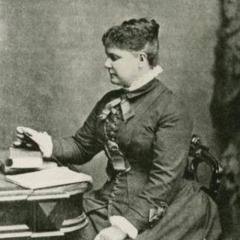
Author

Celia Thaxter
Celia Thaxter

Celia Thaxter was an American writer known for her poetry and prose. Born on June 29, 1835, in Portsmouth, New Hampshire, she spent much of her life on the Isles of Shoals, a group of islands off the coast of Maine. Her work often reflected her close connection to nature and her experiences in the islands. Thaxter's writing career began with her poetry, which was published in various magazines and journals. She later expanded her repertoire to include novels and short stories. Her most famous work is 'The Gables,' a novel that offers a vivid portrayal of island life. Thaxter passed away on August 25, 1894. more

You May Also Like

“The education of young citizens ought to form them to good manners, to accustom them to labor, to inspire them with a love of order, and to impress them with respect for. lawful authority. Religion is the only solid basis of good morals; therefore education should teach the precepts of religion, and the duties of man towards God.”

“To a man of liberal education, the study of history is not only useful, and important, but altogether indispensable, and with regard to the history contained in the Bible ...it is not so much praiseworthy to be acquainted with as it is shameful to be ignorant of it.”

“I think also, that general virtue is more probably to be expected and obtained from the education of youth, than from exhortations of adult persons; bad habits and vices of the mind being, like diseases of the body, more easily prevented than cured. I think moreover, that talents for the education of youth are the gift of God; and that he on whom they are bestowed, whenever a way is opened for use of them, is as strongly called as if he heard a voice from heaven.”

“EDUCATION, n. The bringing up, as of a child; instruction; formation of manners. Education comprehends all that series of instruction and discipline which is intended to enlighten the understanding, correct the temper, and form the manners and habits of youth, and fit them for usefulness in their future stations. To give children a good education in manners, arts and science, is important; to give them a religious education is indispensable; and an immense responsibility rests on parents and guardians who neglect these duties.”

“It has always been a source of serious reflection and sincere regret with me that the youth of the United States should be sent to foreign countries for the purpose of education. Although there are many who escape the danger of contracting principles unfavorable to republican governments, yet we ought to deprecate the hazard attending ardent and susceptible minds from being too strongly and too early prejudiced in favor of other political systems, before they are capable of appreciating their own.”

“The Bible is the best of books, and I wish it were in the hands of every one. It is indispensable to the safety and permanence of our institutions. A free government can not exist without religion and morals, and there cannot be morals without religion. Especially should the Bible be placed in the hands of the young. It is the best school book in the world. I would that all our people were brought up under the influence of that holy book.”

“Human life, from the cradle to the grave, is a school. At every period of his existence man wants a teacher. His pilgrimage upon earth is but a term of childhood, in which he is to be educated for the manhood of a brighter world. As the child must be educated for manhood upon earth, so the man must be educated upon earth, for heaven; and finally that where the foundation is not laid in time, the superstructure can not rise for eternity.”

“History will also afford frequent opportunities of showing the necessity of a public religion, from its usefulness to the public; the advantage of a religious character among private persons; the mischiefs of superstition, and the excellency of the Christian religion above all others, ancient or modern.”