Quotessence
Home / Quotes / Quote by William Beebe

Quote by William Beebe

“The beauty and genius of a work of art may be reconceived, though its first material expression be destroyed; a vanished harmony may yet again inspire the composer; but when the last individual of a race of living things breathes no more, another heaven and another earth must pass before such a one can be again.”

Quote by William Beebe

Author
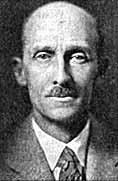
William Beebe
William Beebe

William Beebe was a renowned ornithologist, born on July 29, 1877, and died on June 4, 1962. His research in the field of ornithology was extensive, making significant contributions to the ecology and behavior of birds. more

You May Also Like

“The books of the great scientists are gathering dust on the shelves of learned libraries. And rightly so. The scientist addresses an infinitesimal audience of fellow composers. His message is not devoid of universality but its universality is disembodied and anonymous. While the artist's communication is linked forever with its original form, that of the scientist is modified, amplified, fused with the ideas and results of others and melts into the stream of knowledge and ideas which forms our culture. The scientist has in common with the artist only this: that he can find no better retreat from the world than his work and also no stronger link with the world than his work.”

“The powers of nature are never in repose; her work never stands still.”

“The study of Nature is intercourse with the highest mind. You should never trifle with Nature. At her lowest her works are the works of the highest powers, the highest something in the universe, in whichever way we look at it... This is the charm of Study from Nature itself; she brings us back to absolute truth wherever we wander.”

“Using any reasonable definition of a scientist, we can say that 80 to 90 percent of all the scientists that have ever lived are alive now. Alternatively, any young scientist, starting now and looking back at the end of his career upon a normal life span, will find that 80 to 90 percent of all scientific work achieved by the end of the period will have taken place before his very eyes, and that only 10 to 20 percent will antedate his experience.”