“If we would serve science, we must extend her limits, not only as far as our own knowledge is concerned, but in the estimation of others.”
Quote by Rudolf Virchow
Work
Cellular Pathology as based upon physiological and pathological histology. Twenty lectures delivered in ... 1858. Translated from the second edition of the original by F. Chance. With notes and numerous emendations principally from MS. notes of the author, and illustrated by ... engravings on wood.
Cellular Pathology as based upon physiological and pathological histology is a scholarly work that delves into the study of cellular pathology, utilizing both physiological and pathological histology as its foundation. The content is derived from a series of lectures given in 1858 and has been translated from the second edition of the original text. The translation is enhanced with notes and revisions primarily sourced from the author's manuscript notes. The book is further illustrated with engravings created on wood. more
Author
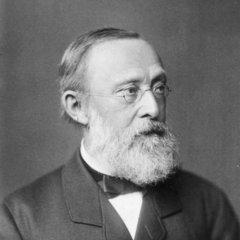
Rudolf Virchow
German physician and one of the founders of cellular pathology, known as one of the greatest scientists in the history of medicine. He proposed the basic principles of cellular pathology, which had a profound impact on the development of modern medicine. more
You May Also Like
“In an examination those who do not wish to know ask questions of those who cannot tell.”
Source: Laughter from a Cloud
“In vertebrate paleontology, increasing knowledge leads to triumphant loss of clarity.”
“Increasing knowledge lessens the sphere of the supernatural.”
Source: The Origin and Development of the Moral Ideas
Source: Science and Culture: Popular and Philosophical Essays
Source: The Lives to Come