“Nietzsche ... argues that all that passes in the life of a society is ephemeral and banausic except for the presence of great personalities, of men like Goethe ... who seem to forge their own destinies, who seem to move unhampered by those burdens of existence which keep most men from rising above the vicissitudes of their daily toil.”
Quote by John Carroll
Work
Break-Out from the Crystal Palace: The Anarcho-Psychological Critique: Stirner, Nietzsche, Dostoevsky
This book delves into the philosophical ideas of Stirner, Nietzsche, and Dostoevsky, analyzing their contributions to anarcho-psychology and their impact on modern thought. more
Author
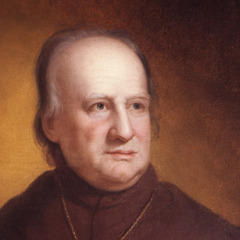
John Carroll
John Carroll (January 8, 1735 - December 3, 1815) was an American religious leader and one of the founding figures of Catholicism in the United States. Born in Ireland, he immigrated to the United States and became the first Archbishop of the United States, playing a significant role in promoting Catholicism and advocating for religious freedom for Catholics in America. more
You May Also Like
Source: Break-Out from the Crystal Palace: The Anarcho-Psychological Critique: Stirner, Nietzsche, Dostoevsky
“We know accurately only when we know little, with knowledge doubt increases.”
Source: Break-Out from the Crystal Palace: The Anarcho-Psychological Critique: Stirner, Nietzsche, Dostoevsky
Source: Break-Out from the Crystal Palace: The Anarcho-Psychological Critique: Stirner, Nietzsche, Dostoevsky
“Man at his best is a system-breaker, an iconoclast seeking not only variety, but destruction.”