“Atheists put on false courage and alacrity in the midst of their darkness and apprehensions, like children who, when they fear to go in the dark, will sing for fear.”
Quote by Alexander Pope
Work
A Supplementary Volume to the Works of Alexander Pope, Esq: Containing Pieces of Poetry, Not Inserted in Warburton's and Warton's Editions : and a Collection of Letters, Now First Published
A Supplementary Volume to the Works of Alexander Pope, Esq is a scholarly compilation that includes additional poems and letters by the renowned 18th-century English poet Alexander Pope. These pieces were not previously featured in the editions compiled by William Warburton and Samuel Johnson. The volume provides a broader perspective on Pope's literary output and personal correspondence, offering readers a more comprehensive understanding of his work and his time. more
Author
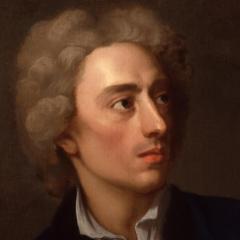
Alexander Pope
Alexander Pope, an English poet, was born on May 21, 1688, and died on May 30, 1744. He is renowned for his wit, satire, and elegant poetry, with his most famous works including 'An Essay on Criticism' and 'The Moral Essays'. Pope's works have had a profound impact on literature and philosophy, both in his time and today. more
You May Also Like
“Atheism is a crutch for those who cannot bear the reality of God.”
Source: Jumpers
Source: Self-consciousness: memoirs
Source: The Ultimate Quotable Einstein