Quotessence
Home / Quotes / Quote by Jessica Valenti

Quote by Jessica Valenti

“Something I say a lot when it comes to anti-feminist stereotypes is that they exist for a reason. The stereotypes of feminists as ugly, or man-haters, or hairy, or whatever it is - that's really strategic. That's a really smart way to keep young women away from feminism, is to kind of put out this idea that all feminists hate men, or all feminists are ugly; and that they really come from a place of fear. If feminism wasn't powerful, if feminism wasn't influential, people wouldn't spend so much time putting it down.”

Quote by Jessica Valenti

Author
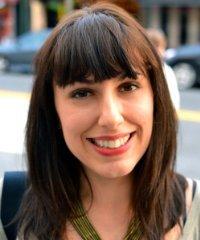
Jessica Valenti
Jessica Valenti

Jessica Valenti, born on November 1, 1978, is an American writer whose work primarily focuses on gender, politics, and social justice issues. Her notable works include 'The Purity Myth: Challenging the Sexual Orthodoxy of the American Right'. more

You May Also Like

“Something you hear a lot is that feminism dead. But if feminism is dead, why do people try so hard to kill it? Something just isn't making sense there. So I think when young women hear like, hey, someone's trying to get something over on me, you know, someone's trying to deliberately keep me away from a movement that could make my life better, I think that really resonates with them.”

“Young women know that something is off; they know that the world is a messed-up place. They know that the world is a sexist place because they've had experiences in their own life; they see things happening to their friends, to their parents. But because feminism isn't widely accepted, because they don't necessarily have access to feminist thought or to feminist groups, they don't necessarily have a language to put behind the feelings and the thoughts that they're having. And they certainly don't have a support system to let them know like, hey, that's okay; you're right, that is screwed up.”

“I think people resist feminism because they're scared. I think for women, they're scared of being picked on or of being called out. I hear from a lot of young women, you know, I don't want to call myself a feminist because I don't want to get in an argument with someone. And it's just not cool; like it's not a cool thing to be associated with. There's no benefit to saying that you're a feminist.”

“Whether people identify as feminists or not, if they're doing work that furthers a feminist cause, I think that's wonderful, like if it works for me, right, it works for the movement. But I do think that personally they're missing out. If you don't identify as a feminist, you're missing out on this whole community that's out there that could really help you with your work, help you with your personal life, and just give you support.”

“One of the things I really like about doing work online, and the thing I like about the work I'm doing now, is that I get to meet feminists all the time and I get to read new feminists every day on the blogosphere. And it's really that kind of diversity of thought that informs me more than anything else these days. It's just kind of learning something new all the time. And I kind of love that there's not really a feminist canon; or maybe there is, but it's being changed, that it's a constantly moving canon in the feminist blogosphere. I love that.”

“There's going to be biological differences between the genders. There's going to be biological differences between two women or two men. There's biological differences between all of us. My concern is, why are we so concerned about it? Why are we so worried about it? Why, whenever a study comes out about men do this one way and women do this one way, or men's brains and women's brains - why are we so interested in that? You know, what makes us so fascinated by differences between the sexes? And I think more often than not that interest is deeply embedded in sexism.”

“I think that blogging and the Internet has completely changed feminism for ever, I think. You know, it used to be, 10 years ago, if you wanted to have a strong, influential voice in the feminist movement, you really needed to be part of this New York/D.C. elite group of feminists, or part of a mainstream feminist organization. And now it's kind of an amazing thing that you can just start a blog and put your voice out there and build your readership.”

“I know I certainly wouldn't be writing books if it hadn't been for the feminist blogosphere, and I think that's a really amazing thing. And just the sheer power of outreach I think is incredible. It used to be that if someone was to get involved in feminism, it was probably because they were already interested. They were already interested in feminism; they were already interested in being an activist, and they found their way to like a NOW meeting or to a consciousness-raising group or something like that.”