Quotessence
Home / Quotes / Quote by John Updike

Quote by John Updike

Work

Rabbit is Rich

This book delves into the lives of the wealthy and the poor in a society recovering from war, examining the impact of wealth on individuals and society at large. more
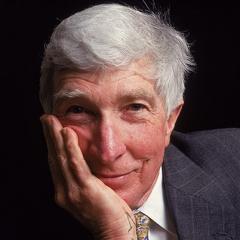
Author

John Updike
John Updike

John Updike was an American novelist known for his profound insights into middle-class life and his delicate narrative skills. His works spanned a wide range of genres from short stories to novels, including the classic 'Rabbit, Run' series and 'The Centaur'. more

You May Also Like

“I don’t think about politics,” Rabbit says. “That’s one of my Goddam precious American rights, not to think about politics. I just don’t see why we’re supposed to walk down the street with our hands tied behind our back and let ourselves be blackjacked by every thug who says he has a revolution going. And it really burns me up to listen to hotshot crap-car salesmen dripping with Vitalis sitting on their plumped-up asses bitching about a country that’s been stuffing goodies into their mouth ever since they were born.”

“The voice welling up out of this little man is terrific, Harry had noticed it at the house, but here, in the nearly empty church, echoing off the walnut knobs and memorial plaques and high arched rafters, beneath the tall central window of Jesus taking off into the sky with a pack of pastel apostles for a launching pad, the timbre is doubled, richer, with a rounded sorrowful something Rabbit hadn't noticed hitherto, gathering and pressing the straggle of guests into a congregation, subduing any fear that this ceremony might be a farce. Laugh at ministers all you want, they have the words we need to hear, the ones the dead have spoken.”

“Harry has heard this before. Thelma's voice is dutiful and deliberately calm, issuing small family talk when both know that what she wants to discuss is her old issue, that flared up a minute ago, of whether he loves her or not, or why at least he doesn't need her as much as she does him. But their relationship at the start was established with her in pursuit of him, and all the years since, of hidden meetings, of wise decisions to end it and thrilling abject collapses back into sex, have not disrupted the fundamental pattern of her giving and his taking, of her fearing their end more than he, and clinging, and disliking herself for clinging, and wanting to punish him for her dislike, and him shrugging and continuing to bask in the sun of her love, that rises every day whether he is there or not. He can't believe it, quite, and has to keep testing her.”

“He imagines the plane exploding as it touches down, ignited by one of its glints, in a ball of red flame shadowed in black like you see on TV all the time, and he is shocked to find within himself, imagining this, not much emotion, just a cold thrill at being a witness, a kind of bleak wonder at the fury of chemicals, and relief that he hadn't been on the plane himself but was instead safe on this side of the glass, with his faint pronged sense of doom.”

“Inside, upstairs, where the planes are met, the spaces are long and low and lined in tasteful felt gray like that cocky stewardess's cap and filled with the kind of music you become aware of only when the elevator stops or when the dentist stops drilling. Plucked strings, no vocals, music that's used to being ignored, a kind of carpet in the air, to cover up a silence that might remind you of death.”