Quotessence
Home / Quotes / Quote by Charles Bukowski

Quote by Charles Bukowski

Work

Post Office

In this novel, the reader is immersed in the daily routines and interpersonal dynamics of a post office in the United States. The story delves into the mundane aspects of life, highlighting the challenges and routines faced by the post office staff. The narrative explores themes of bureaucracy, the impact of daily routines on personal lives, and the search for meaning in the ordinary. more
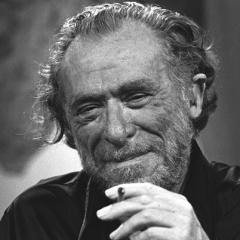
Author

Charles Bukowski
Charles Bukowski

Charles Bukowski, born on August 16, 1920, was an influential American poet. Known for his unique style and profound depiction of the lives of the underclass in America, he is considered one of the representatives of the Beat Generation. more

You May Also Like

“Tom said to himself that it was not such a hollow world, after all. He had discovered a great law of human action, without knowing it -- namely, that in order to make a man or a boy covet a thing, it is only necessary to make the thing difficult to attain. If he had been a great and wise philosopher, like the writer of this book, he would now have comprehended that Work consists of whatever a body is obliged to do, and that Play consists of whatever a body is not obliged to do. And this would help him to understand why constructing artificial flowers or performing on a tread-mill is work, while rolling ten-pins or climbing Mont Blanc is only amusement. There are wealthy gentlemen in England who drive four-horse passenger-coaches twenty or thirty miles on a daily line, in the summer, because the privilege costs them considerable money; but if they were offered wages for the service, that would turn it into work and then they would resign.”

“Why do farmers farm, given their economic adversities on top of the many frustrations and difficulties normal to farming? And always the answer is: "Love. They must do it for love." Farmers farm for the love of farming. They love to watch and nurture the growth of plants. They love to live in the presence of animals. They love to work outdoors. They love the weather, maybe even when it is making them miserable. They love to live where they work and to work where they live. If the scale of their farming is small enough, they like to work in the company of their children and with the help of their children. They love the measure of independence that farm life can still provide. I have an idea that a lot of farmers have gone to a lot of trouble merely to be self-employed to live at least a part of their lives without a boss.”