Quotessence
Home / Quotes / Quote by Sun Tzu

Quote by Sun Tzu

“Война - это путь обмана. Поэтому, даже если [ты] способен, показывай противнику свою неспособность. Когда должен ввести в бой свои силы, притворись бездеятельным. Когда [цель] близко, показывай, будто она далеко; когда же она действительн далеко, создавай впечатление, что она близко. Изобрази выгоду, чтобы завлечь его. Сотвори беспорядок [в его силах] и возьми его. Если он полон, приготовься; если он силен, избегай его. Если он в гневе, беспокой его; будь почтителен, чтобы он возомнил о себе. Если враг отдохнувший, заставь его напрячь силы. Если он объединен, разъедини его. Нападай там, где он не приготовился. Или вперед там, где он не ожидает. Таковы пути, которыми военные стратеги побеждают. Но о них нельзя говорить наперед.”

Quote by Sun Tzu

Work

The Art of War

This seminal work explores the principles of warfare, leadership, and conflict resolution, offering timeless insights into the nature of power and the art of winning battles without resorting to brute force. more

Author

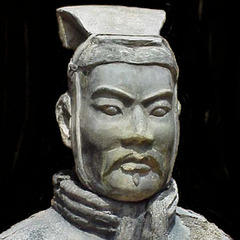
Sun Tzu
Sun Tzu

Sun Tzu, born around 544 BC and died around 496 BC, was a renowned Chinese military strategist. His military thoughts are mainly reflected in his book 'The Art of War', which is considered the classic of military strategy and has had a profound impact on various fields such as military, politics, and economics in later generations. more

You May Also Like

“High expectations I have. In hardness I labor that, fuller joy at the top I may partake. Nevertheless, in vain I toil. And then, friends'and people's reproach I become, because of my drowning hopes that keeps me out of the circle of richies and honor. I'm the distance they keep like plague, because I have no physical wealth and glamour like them. But in all my stony falls and griefs, the word of restoration in the blood given to me upon the altar of salvation, I cling. For in the end, mercy will attend my situation and see to my hard labor with crown of great success.”

“They had gathered at Eastcheap to wait. At this time of day, the marketplace ought to have been thronged with people looking for bargains, moving from stall to stall, examining the fresh fish, choosing the plumpest hens, buying candles and pepper and needles. The stalls were open, but the fishmongers and cordwainers and butchers were doing no business, despite the growing crowd. The sun was hot, flies were thick, and the odors pungent; no one complained, though. They talked and gossiped among themselves, strangers soon becoming friends, for the normally fractious and outspoken Londoners had forgotten their differences, at least for a day, united in a common purpose and determined to revel in their triumph, for they were pragmatic enough to understand this might be their only one. Now they joked and swapped rumors and waited with uncommon patience, and at last they heard a cry, swiftly picked up and echoed across the marketplace: “She is coming!”