Quotessence
Home / Quotes / Quote by Carlos Fuentes

Quote by Carlos Fuentes

“When we have a better, more social, more responsible, less egotistical, less corrupt system, Mexico will be able to give work to the millions of Mexicans who have to build our roads, dams, schools, all the things that are left undone in Mexico while we have the manpower. There is something very bad going on, on both sides of the border in Mexico and the US. But the worker is a worker, not a criminal. So, I am in favor of a solution such as the Kennedy-McCain proposals that make it clear what steps have to be taken to accept the fact that the US needs foreign workers.”

Quote by Carlos Fuentes

Author
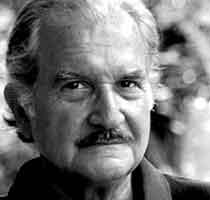
Carlos Fuentes
Carlos Fuentes

Carlos Fuentes, born on November 11, 1928 and died on May 15, 2012, was a renowned Mexican novelist. His works are characterized by deep social insight and a unique literary style, which have had a profound impact on Latin American literature. more

You May Also Like

“Migration is an opportunity, not a problem. And in the sense that it is an opportunity, it goes on to a bilateral agreement, between Mexico and the US, the US and the Dominican Republic, whatever you wish, and it has to be a multilateral, international event. I am in favor of an international union of migrant workers that really takes on the problems that affect Europe, with the migrants coming from Africa, and the US with the migrants coming from Latin America. It has to be considered an international question, with international solutions, and with no problems national or international.”

“Now the masses of Latin America are electing governments they feel can take forward the democratic reforms of the last 20 years, and transform them into social and economic reforms. This is, I think, extremely important, because it also means that the left has abandoned the revolutionary solution proposed by Che Guevara and has taken the democratic path.”

“I am a Mexican. The United States lived seventy-five years with the one party system in Mexico - the PRI - without batting an eyelid, never demanding democracy of Mexico. Democracy came because Mexicans fought for democracy and made a democracy out of our history, our possibilities, our perspectives. Democracy is not something that can be exported like Coca-Cola. It has to be bred from the inside, according to the culture, the conditions of each country.”

“Now I'm sixty-one... sixty-two, pretty soon. It's a really interesting age. Now we have women of your age, and coming up, and all these fantastic writers, who have managed to have their children but continue with their art, their work. I think women are doing the most interesting writing right now, the most interesting art. I see everything through this lens, of women finally taking their place in the world. Their true place. And it's very, very exciting to me.”

“If you're deeply engaged in an event, you're part of it. But if you're outside of it, disinterested, you are the regard that registers history. And that disinterestedness is different from objectivity. The objective view sees only the event, while the disinterested one participates as well as views by creating that link to history. It's a type of viewing that's both inside and out of the event, that brings to the viewing the capacity for human emotion, for compassion, but holds it openly. And objectivity excludes the human element, and is therefore not a point of view open to humans.”

“Being in unfamiliar places has no effect on my writing, except that it often means I'm caught up in the logistics of travel, the places and people on the spot, etc., etc., which can mean that I don't have the time to write. But I try, wherever I am, to take a couple of hours in the early evening to go off and write. Because I never write from personal experience, per se, where I am makes no difference except for this element of available time.”

“Rather than thinking of sound and sense in my essays as two opposing principles, two perpendicular trajectories, as they are often considered in conversations around translation, or even as two disassociated phenomena that can be brought together to collaborate with more or less success, I think of sound as sense. Sound has its own meaning, and it's one of the many non-semantic dimensions of meaning in language. I want to emphasize is the formal dynamic between language-as-information and language-as-art-material.”