Quotessence
Home / Quotes / Quote by Aristotle

Quote by Aristotle

“In [the soul] one part naturally rules, and the other is subject, and the virtue of the ruler we maintain to be different from that of the subject; the one being the virtue of the rational, and the other of the irrational part. Now, it is obvious that the same principle applies generally, and therefore almost all things rule and are ruled according to nature.”

Quote by Aristotle

Work

Politics

This book delves into the fundamental principles and practices of politics, examining various political systems and ideologies across different historical periods and cultures. more

Author

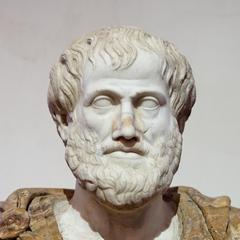
Aristotle
Aristotle

Aristotle, a renowned Greek philosopher, is one of the founders of Western philosophy. His thoughts covered a wide range of fields, including ethics, logic, politics, and had a profound impact on the world. more

You May Also Like

“Now the soul of man is divided into two parts, one of which has a rational principle in itself, and the other, not having a rational principle in itself, is able to obey such a principle. And we call a man in any way good because he has the virtues of these two parts.”

“If then, as we say, good craftsmen look to the mean as they work, and if virtue, like nature, is more accurate and better than any form of art, it will follow that virtue has the quality of hitting the mean. I refer to moral virtue [not intellectual], for this is concerned with emotions and actions, in which one can have excess or deficiency or a due mean.”

“Not every action or emotion however admits of the observance of a due mean. Indeed the very names of some directly imply evil, for instance malice, shamelessness, envy, and, of actions, adultery, theft, murder. All these and similar actions and feelings are blamed as being bad in themselves; it is not the excess or deficiency of them that we blame. It is impossible therefore ever to go right in regard to them - one must always be wrong.”

“Virtue also depends on ourselves. And so also does vice. For where we are free to act we are also free to refrain from acting, and where we are able to say No we are also able to say Yes; if therefore we are responsible for doing a thing when to do it right, we are also responsible for not doing it when not to do it is wrong, and if we are responsible for rightly not doing a thing, we are also responsible for wrongly doing it.”