Quotessence
Home / Quotes / Quote by Torquato Tasso

Quote by Torquato Tasso

Author

Torquato Tasso
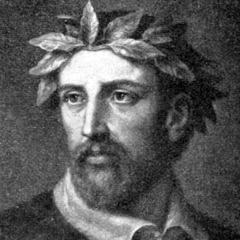
Torquato Tasso

Torquato Tasso (March 11, 1544 – April 25, 1595) was a prominent Italian poet of the late Renaissance, best known for his epic poem 'Jerusalem Delivered' (Gerusalemme Liberata). Born in Sorrento, he traveled widely in Italy and was deeply influenced by classical literature and Christian themes. His works blend epic tradition with religious fervor, exploring war, love, and faith. Tasso's poetic language is elegant and emotionally rich, leaving a lasting impact on European literature. However, his later years were marred by mental illness and religious persecution, leading to a tragic end in Rome. His life and work became a key inspiration for the Romantic movement. more

You May Also Like

“Sociological method as we practice it rests wholly on the basic principle that social facts must be studied as things, that is, as realities external to the individual. There is no principle for which we have received more criticism; but none is more fundamental. Indubitably for sociology to be possible, it must above all have an object all its own. It must take cognizance of a reality which is not in the domain of other sciences... there can be no sociology unless societies exist, and that societies cannot exist if there are only individuals.”

“I have never worked for fame or praise, and shall not feel their loss as I otherwise would. I have never for a moment lost sight of the humble life I was born to, its small environments, and the consequently little right I had to expect much of myself, and shall have the less to censure, or upbraid myself with for the failures I must see myself make.”

“I don't know how long it has been since my ear has been free from the roll of a drum. It is the music I sleep by, and I love it.... I shall remain here while anyone remains, and do whatever comes to my hand. I may be compelled to face danger, but never fear it, and while our soldiers can stand and fight, I can stand and feed and nurse them.”