Quotessence
Home / Quotes / Quote by H. P. Blavatsky

Quote by H. P. Blavatsky

“Nothing of that which is conducive to help man, collectively or individually, to live not "happily" but less unhappily in this world, ought to be indifferent to the Theosophist-Occultist. It is no concern of his whether his help benefits a man in his worldly or spiritual progress; his first duty is to be ever ready to help if he can, without stopping to philosophize.”

Quote by H. P. Blavatsky

Author
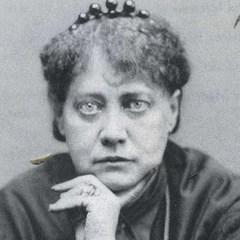
H. P. Blavatsky
H. P. Blavatsky

H. P. Blavatsky was a Russian philosopher, writer, and occultist renowned for her contributions to the Theosophical Movement. Born on August 12, 1831, in Kyiv, Ukraine, she later settled in India, where she established the Theosophical Society in 1875. Blavatsky's writings and teachings have profoundly influenced the development of various esoteric and spiritual movements. more

You May Also Like

“I speak "with absolute certainty" only so far as my own personal belief is concerned. Those who have not the same warrant for their belief as I have, would be very credulous and foolish to accept it on blind faith. Nor does the writer believe any more than her correspondent and his friends in any "authority" let alone "divine revelation"!”

“"True science has no belief," says Dr. Fenwick, in Bulwer-Lytton's 'Strange Story;' "true science knows but three states of mind: denial, conviction, and the vast interval between the two, which is not belief, but the suspension of judgment." Such, perhaps, was true science in Dr. Fenwick's days. But the true science of our modern times proceeds otherwise; it either denies point-blank, without any preliminary investigation, or sits in the interim, between denial and conviction, and, dictionary in hand, invents new Graeco-Latin appellations for non-existing kinds of hysteria!”

“When science shall have effectually demonstrated to us the origin of matter, and proved the fallacy of the occultists and old philosophers who held (as their descendants now hold) that matter is but one of the correlations of spirit, then will the world of skeptics have a right to reject the old Wisdom, or throw the charge of obscenity in the teeth of the old religions.”

“But, if the knowledge of the occult powers of nature opens the spiritual sight of man, enlarges his intellectual faculties, and leads him unerringly to a profounder veneration for the Creator, on the other hand ignorance, dogmatic narrow-mindedness, and a childish fear of looking to the bottom of things, invariably leads to fetish-worship and superstition.”

“Every one of the numberless religions and religious sects views the Deity after its own fashion; and, fathering on the unknown its own speculations, it enforces these purely human outgrowths of overheated imagination on the ignorant masses, and calls them "revelation." As the dogmas of every religion and sect often differ radically, they cannot be true. And if untrue, what are they?”

“"The myths," says Horace in his Ars Poetica, "have been invented by wise men to strengthen the laws and teach moral truths." While Horace endeavored to make clear the very spirit and essence of the ancient myths, Euhemerus pretended, on the contrary, that "myths were the legendary history of kings and heroes, transformed into gods by the admiration of the nations." It is the latter method which was inferentially followed by Christians when they agreed upon the acceptation of euhemerized patriarchs, and mistook them for men who had really lived.”