Quotessence
Home / Quotes / Quote by Warren Leight

Quote by Warren Leight

“I usually base my characters on composites of people I know. One trumpet player in SIDE MAN is really a mix of four different guys I knew growing up. Patsy , the waitress, is a mix of about three different people. I like doing it that way. I start with the characters, as opposed to plot, location, or some visual element. I write more by ear than by eye. I always work on the different sound of each character, trying to make sure each has a specific voice and speech pattern, which some writers could care less about.”

Quote by Warren Leight

Author
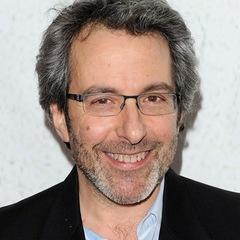
Warren Leight
Warren Leight

Warren Leight is an acclaimed American playwright, known for his profound character development and complex plot structures. His works, including 'The Last Days of Judas Iscariot' and 'New York Stories', are celebrated for their deep insights into human nature and social issues. more

You May Also Like

“The culturally specific, in particular, the American porch play that American writers have cherished and loved for many years in terms of their new writing, has seemed to have very little relevance to a much more fast-flowing, abstract, experimental drama that has been emerging in [the UK]. The porch play, not to mention that thing of, Oops, I wasn't loved enough by my father, somehow didn't have the relevance in this country.”

“We were interviewing an author, and we started talking about how so many of them - Salinger, Shaw, Fitzgerald - were really an odd bunch. They put a barrier around themselves, and not many people got through it. This was the spark that I really latched onto - someone who could break through the barrier. Of course [FINDING FORRESTER] really began to take shape when I began to wonder, what if it was a young person?”

“I've come to view screenwriting assignments as playwriting grants, because they provide a considerable financial cushion. However, they can also be extremely time-consuming. Film projects tend to drag on and on, which takes me away from the theatre, and then they don't get made. At the same time, the screenplays that have come my way have been quite challenging, for the most part, and even enjoyable.”

“Yes, I am one of those people who feels that most of my work is adaptation of one sort or another. For me, it's a way to jump-start the engine. For example, some people use the technique of basing a character on a friend. They start writing with his or her voice, then at a certain point, the character takes off on his or her own. It probably no longer resembles the model, but it helped the author to get going. I find that's true of form, too. For every play I've written, I know what play I was trying to imitate. That helps me get going.”

“. . I have written a couple of screenplays for studios, and each time has been less gratifying than the last. In my experience, they want no real representations of homosexuality, they want no complexity, they are terrified of ambiguity and unanswered questions - they don't know what they want, except that they want to make lots of money. The only freedom I've ever had as an artist has been in the theatre.”

“I have been approached now and again about sitcoms, but, with very few exceptions, one simply needs to move to L.A. for at least a year or two these days if one wants to develop a series - which is what writing a pilot means. I've also been approached about writing episodes for sitcoms, but in order to do that one actually has to watch sitcoms. . . . Life's too short for television, and I don't what it on my actual gravestone, HE STARED AT A BOX FOR 10,000 HOURS.”

“I've begun to believe more and more that movies are all about transitions, that the key to making good movies is to pay attention to the transition between scenes. And not just how you get from one scene to the next, but where you leave a scene and where you come into a new scene. Those are some of the most important decisions that you make. It can be the difference between a movie that works and a movie that doesn't.”

“All these teachers and [screenwriting] books mean you see movies that have been worked over by more committees wielding more rules, that all originality and authorship is lost. That's why you're seeing superstars like Brad Pitt in THE FIGHT CLUB and Tom Cruise in MAGNOLIA. They're desperately searching for people writing and directing off-formula movies.”