“History will have to record that the greatest tragedy of this period of social transition was not the strident clamor of the bad people, but the appalling silence of the good people. Injustice anywhere is a threat to justice everywhere. We are caught in an inescapable network of mutuality, tied in a single garment of destiny. Whatever affects one directly, affects all indirectly. He who passively accepts evil is as much involved in it as he who helps to perpetrate it. He who accepts evil without protesting against it is really cooperating with it.”
Quote by Martin Luther King, Jr.
Author
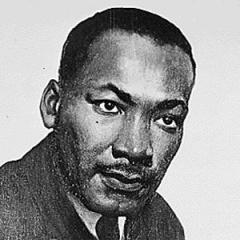
Martin Luther King, Jr.
Martin Luther King Jr. was an American civil rights activist known for his nonviolent protest and advocacy for equal rights. His 'I Have a Dream' speech at the Lincoln Memorial in 1963 became a significant milestone in the American civil rights movement. more
You May Also Like
Source: Basic Writings of Nietzsche
“People with healthy self-esteem do not need to create pretend identities.”
Source: Rock My Soul: Black People and Self-Esteem
Source: On the contrary
“I shall go wherever I am asked to participate for freedom.”
Source: THE TRUE BELIEVER
Source: Tomorrow's God: Our Greatest Spiritual Challenge