“Constitutions of civil government are not to be framed upon a calculation of existing exigencies, but upon a combination of these with the probable exigencies of ages, according to the natural and tried course of human affairs. Nothing, therefore, can be more fallacious than to infer the extent of any power, proper to be lodged in the national government, from an estimate of its immediate necessities.”
Quote by Alexander Hamilton
Work
The Federalist, on the New Constitution, Written in 1788
Composed by Alexander Hamilton, James Madison, and John Jay, this collection of essays advocates for the ratification of the U.S. Constitution, offering a comprehensive defense of its principles and structure. more
Author
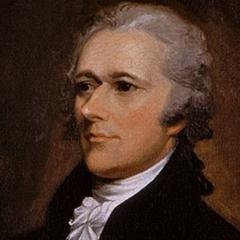
Alexander Hamilton
Alexander Hamilton was a Founding Father of the United States, born on January 11, 1757, and died on July 12, 1804. He played a crucial role in the American Revolutionary War and was instrumental in the drafting of the U.S. Constitution. As the first Secretary of the Treasury, Hamilton promoted fiscal stability and economic growth, establishing the First Bank of the United States and proposing solutions for federal debt. His ideas and policies had a profound impact on the early political and economic development of the United States. more
You May Also Like
“My all-time favorite program in my entire life was 'Buffy the Vampire Slayer.'”
Source: The Federalist, on the New Constitution: Written in 1788
Source: The Federalist Papers: A Collection of Essays Written in Favour of the New Constitution
Source: The Federalist on the New Constitution
Source: The Federalist, on the New Constitution, Written in the Year 1788
Source: The Federalist, on the New Constitution, Written in the Year 1788
Source: The Federalist, on the New Constitution, Written in the Year 1788
“The express authority of the people alone could give validity to the Constitution.”
Source: The Federalist, on the New Constitution, Written in the Year 1788
Source: The federalist papers
Source: The Virginia Report of 1799-1800: Touching the Alien and Sedition Laws; Together with the Virginia Resolutions of December 21, 1798, Including the Debate and Proceedings Thereon in the House of Delegates of Virginia and Other Documents Illustrative of the Report and Resolutions