Quotessence
Home / Quotes / Quote by Bjorn Lomborg

Quote by Bjorn Lomborg

“Choosing expensive carbon-cutting policies or insisting on green development approaches might seem like an easy choice for the world’s elite in Washington, DC, or Paris, France, but the burden of these choices falls unfairly on the world’s poor, and especially on those living in abject poverty. They need more energy, not moralizing from the West. It is perverse to hear rich people piously claim that we should help the world’s poor by cutting carbon dioxide to make their future slightly less worse, when we have huge opportunities to make their lives much better, much more quickly, and much more effectively.”

Quote by Bjorn Lomborg

Author
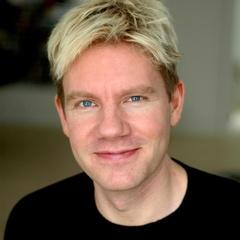
Bjorn Lomborg
Bjorn Lomborg

Bjørn Lomborg is a Danish writer, scholar, and environmental activist known for his economic analysis of environmental issues. He was born on January 6, 1965, and his work typically emphasizes the importance of cost-benefit analysis in addressing environmental challenges. more

You May Also Like

“The negative impacts (of biofuels) were much greater than most had anticipated...the amount of crops needed to fill an SUV’s fuel tank with biofuel would feed a child for an entire year, and every gallon of biofuel wiped out forty meals… “A srong climate campaigner called the subsidies driving the biofuel industry’s growth ‘a crime against humanity.’ Yet, vested agricultural interests had made the bad policies almost impossible to overturn. It seems that we have learned little from recent history, as we plow headlong into new policies that will similarly hurt the world’s poor.”

“Emissions of carbon dioxide are largely by-products of productivity-- of industry, governments, and individuals producing things that we want more of (including heating, cooling, food, transport, hospital care, and so much more)..When countries promise to reduce their emissions, they are effectively promising to make all these things a touch more expensive. That acts as a slight brake on the economy, leading to a small reduction in growth… “This cost is the relevant social cost of climate policies-- the reduction in welfare that comes from each nation insisting on using energy that is slightly more costly and less reliable than fossil fuels.” -p. 112”

“The Paris Agreement will cost a fortune to carry out and do almost no good… Every single major industrialized country is failing to live up to the promises it made under the Paris Agreement, and the few countries on track are too small to make any significant impact at all...Spending trillions to achieve almost nothing is, not surprisingly, a bad idea. Every dollar spent will produce climate benefits worth just 11 cents.” P. 111, 118, 123”

“Biomass, which basically is a fancy-sounding name for wood, is one of the old, reliable renewables that can produce energy when it is needed. The problem for the planet is that wood is often imported from US forests in diesel-driven ships, and emits MORE carbon dioxide than even coal when it is burned. Biomass is categorized by the EU only as carbon dioxide free because it is hoped that felled trees will be replanted and over many future decades will soak up as much carbon dioxide as was released by its burning. Needless to say, this is dubious accounting at best.” -p. 108”

“The jarring fact is that humanity just finished spending two centuries GETTING RID OF renewable energy and replacing it with fossil fuels. When everyone was poor, the whole world cooked and kept warm using polluting renewable energy sources like wood and dung...In the poor world, replacing fossil fuels with new renewable energy sources like wind and solar power is hard because most people desperately want MUCH MORE power at lower cost, not fickle power at high cost.” -pp. 104-5”

“We should not confuse the rising costs of flooding with flooding itself (or indeed with climate change). It is entirely caused by more houses and more wealth; in fact, the cost compared to the US national income had declined almost tenfold. If we want to reduce this amount even more, the solution isn’t to be found in radically reducing carbon dioxide levels. The solution is to stop building lots of big, expensive houses in flood zones… “Any disaster today will cause more damage because there are more homes, factories, office buildings, and infrastructure to destroy.” -pp. 66, 74”

“Global temperature and GDP are both rising, and each affects the other… We have to find the right balance between the two factors. If we focus solely on growing global GDP, we risk temperatures rising to such an extent that the negative impact on our well-being will more than offset the benefits brought about by extra growth. Yet, if we try to cut as much carbon dioxide as we can, out of a sense of panic, we could easily end up reducing human well-being to a degree that far offsets any environmental benefits we achieve.” -p. 46”

“The expanding bull’s eye effect means we’re likely to see much more costly disasters happen over time, even if the climate doesn’t change at all… In reality, much (and often all) we’re seeing is that more people with more stuff live in harm’s way.” -p. 37 “We also need to stop believing that any story with climate in it is best solved through climate policies… Even if we went all-in and spent hundreds of trillions on climate policies, SEA LEVELS WOULD STILL RISE, ONLY SLIGHTLY LESS than if we did nothing. Millions would still get flooded. If we instead went all-in on adaptation, we could for less than a hundredth of the cost save almost everyone. The same with heat deaths; focusing on climate policies costs vastly more yet helps much, much less than air conditioning.” -p. 37”