Quotessence
Home / Quotes / Quote by Bjorn Lomborg

Quote by Bjorn Lomborg

“The expanding bull’s eye effect means we’re likely to see much more costly disasters happen over time, even if the climate doesn’t change at all… In reality, much (and often all) we’re seeing is that more people with more stuff live in harm’s way.” -p. 37 “We also need to stop believing that any story with climate in it is best solved through climate policies… Even if we went all-in and spent hundreds of trillions on climate policies, SEA LEVELS WOULD STILL RISE, ONLY SLIGHTLY LESS than if we did nothing. Millions would still get flooded. If we instead went all-in on adaptation, we could for less than a hundredth of the cost save almost everyone. The same with heat deaths; focusing on climate policies costs vastly more yet helps much, much less than air conditioning.” -p. 37”

Quote by Bjorn Lomborg

Author
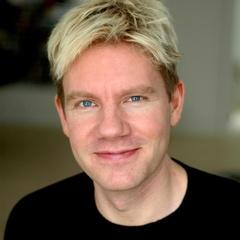
Bjorn Lomborg
Bjorn Lomborg

Bjørn Lomborg is a Danish writer, scholar, and environmental activist known for his economic analysis of environmental issues. He was born on January 6, 1965, and his work typically emphasizes the importance of cost-benefit analysis in addressing environmental challenges. more

You May Also Like

“People are panicking about climate change in large part because the media and environmental campaigners tell us to, because politicians overhype the likely effects, and because scientific research is often communicated without crucial context…: humans adapt to their changing earth. They have for millenia… “We don’t just use up the iron or gas that is there and then give up. We get better at finding more, at lower cost, in effect allowing humanity access to ever more and ever cheaper resources… “Once the human propensity for adaptation is taken into account, the numbers on climate change start looking a lot less scary. And adaptation should ALWAYS be factored into any climate change study, because humans are ALWAYS adapting.” -p. 19, 29, 35”

“We should be innovating tomorrow’s technologies rather than erecting today’s inefficient turbines and solar panels. We should explore fusion, fission, water splitting, ...algae grown on the ocean surface that produces oil… This is one more cost of the relentless alarmism. Since we’re so intent on doing something right now, even if it is almost trivial, we neglect to focus on the technological breakthroughs that in the long run could actually allow humanity to move away from fossil fuels.” -pp. 14, 15”

“One of the great ironies of climate change activism today is that many of the movement’s most vocal proponents are also horrified by global income inequality. They are blind, however, to the fact that the costs of the policies they demand will be borne disproportionately by the world’s poorest. This is because so much of climate change policy boils down to limiting access to cheap energy… “Countries in the developing world need cheap and reliable energy, for now mostly from fossil fuels, to promote industry and growth. Not surprisingly, a recent study of the consequences of implementing the Paris Agreement showed that it will actually increase poverty.”

“In the first place, I want to emphasise the note of interrogation at the end of my title. Even if I could answer the question for myself, the answer would apply only to me and not to you. The only advice, indeed, that one person can give another about reading is to take no advice, to follow your own instincts, to use your own reason, to come to your own conclusions. If this is agreed between us, then I feel at liberty to put forward a few ideas and suggestions because you will not allow them to fetter that independence which is the most important quality that a reader can possess. After all, what laws can be laid down about books? ...”