“Am I right in suggesting that ordinary life is a mean between these extremes, that the noble man devotes his material wealth to lofty ends, the advancement of science, or art, or some such true ideal; and that the base man does the opposite by concentrating all his abilities on the amassing of wealth?' Exactly; that is the real distinction between the artist and the bourgeois, or, if you prefer it, between the gentleman and the cad. Money, and the things money can buy, have no value, for there is no question of creation, but only of exchange. Houses, lands, gold, jewels, even existing works of art, may be tossed about from one hand to another; they are so, constantly. But neither you nor I can write a sonnet; and what we have, our appreciation of art, we did not buy. We inherited the germ of it, and we developed it by the sweat of our brows. The possession of money helped us, but only by giving us time and opportunity and the means of travel. Anyhow, the principle is clear; one must sacrifice the lower to the higher, and, as the Greeks did with their oxen, one must fatten and bedeck the lower, so that it may be the worthier offering.”
Quote by Aleister Crowley
Book:Moonchild
Work
Author
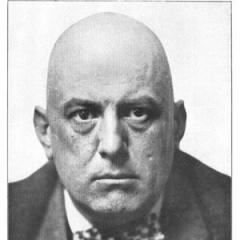
Aleister Crowley
Aleister Crowley, a British poet, mystic, and writer, was born on October 12, 1875, and died on December 1, 1947. He is known for his poetic works and mystical practices, and is considered one of the most controversial figures of the 20th century. more
You May Also Like
Source: Never Enough
Source: ACross Tic
Source: Random Molecular Mirroring
“It's humbling to think how little we contribute to our own ideas.”
“I can love who I think you are Or you can allow yourself To be yourself So that I can love YOU.”
“The best liars are the ones who fool you by claiming the never lie at all.”
Source: More Happy Than Not
Source: It's Not Like It's a Secret
Source: Vulnerable Faith: Missional Living in the Radical Way of St. Patrick